
Countertops in Austin: your complete guide to Marble, Granite, Quartzite & Quartz
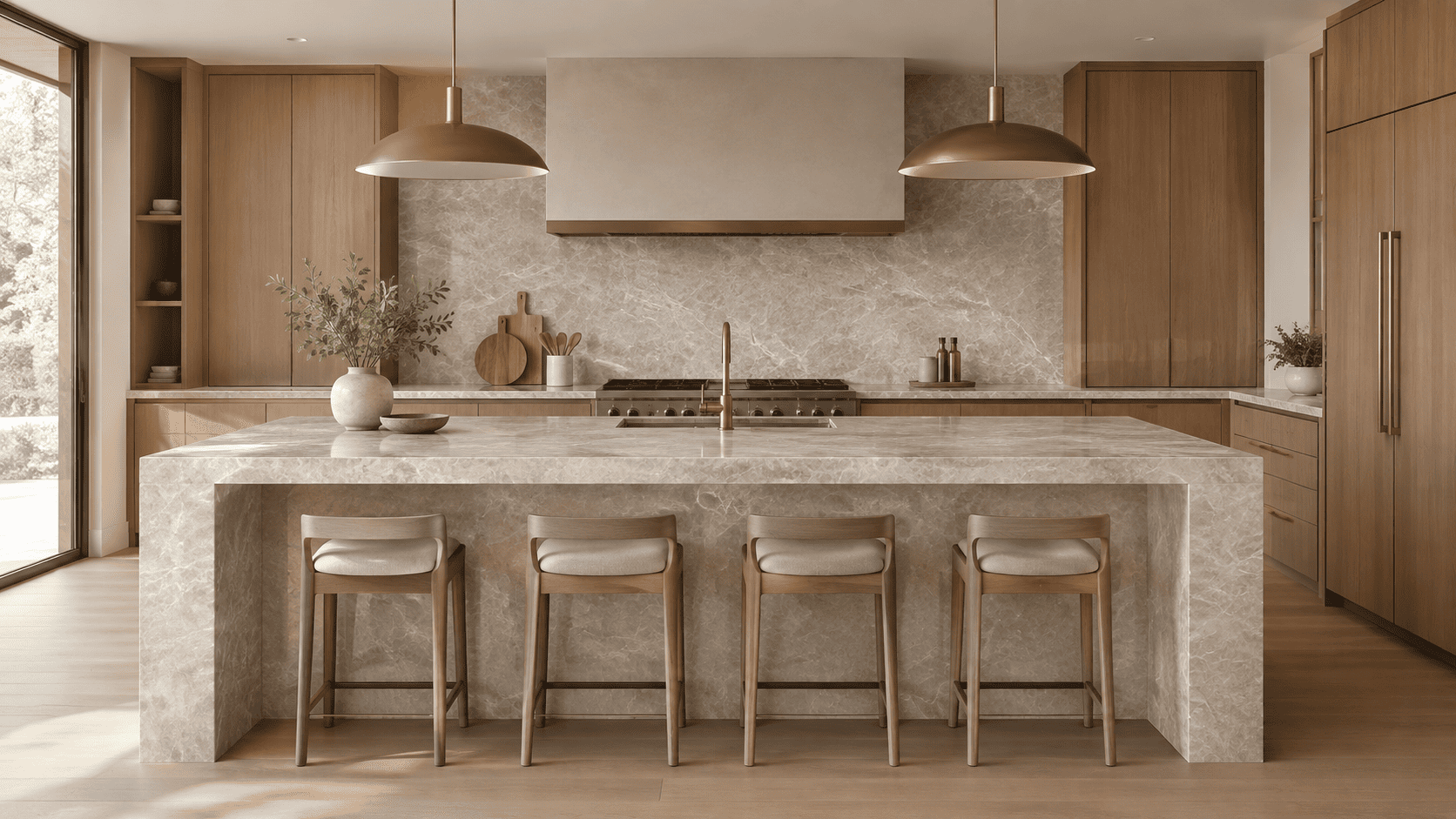
At Unique Stone Boutique, we believe your countertops should be as unique as your home and that choosing the right material starts with understanding what each one truly offers. Whether you are searching for a granite store or a specialized quartzite store in Austin, our mission is to provide the education and inventory you need to make an informed investment.
Whether you're renovating a kitchen, redesigning a bathroom, or building from the ground up, choosing the right countertop material is one of the most impactful decisions in any project. The options available today, from classic natural stones to high-performance engineered surfaces, each bring a distinct combination of beauty, durability, and maintenance requirements.
Ready to learn more about countertops?
This is the stone guide from Unique Stone Boutique: your countertop store in Austin, TX.
This content breaks down the most popular countertop materials available today: quartzite, granite, marble, engineered quartz, and soapstone. We cover what makes each unique, how they perform in real-life settings, and what it takes to keep them looking their best. So you can make a confident, informed choice for your home.
Natural stone vs. Engineered stone for countertops
When you're choosing a countertop, two words come up constantly: natural and engineered. They sound self-explanatory, but the difference goes a lot deeper than how the stone was made. It affects how your surface looks, performs, ages, and how much attention it needs from you over the years.
Here's what you actually need to know before you decide.
What is Natural Stone?
Natural stone is exactly what the name says: material extracted directly from the earth, cut into slabs, and finished for use. No additives, no resins, no manufacturing process. What you see on the surface is the result of millions of years of geological transformation.
Quartzite, granite, marble, and soapstone are all natural stones. Each slab is one of a kind, the veining, color variation, and mineral patterns are never repeated. That individuality is part of the appeal. It's also part of the commitment: natural stone is a living material that responds to its environment, which means it needs periodic sealing and thoughtful daily care.
What is Engineered Stone?
Engineered stone, most commonly known as quartz, is a manufactured product. It's made from approximately 90–95% ground quartz mineral mixed with polymer resins and pigments, then compressed under heat into slabs. The process allows for precise control over color, pattern, and consistency.
Because resins fill all the pores during manufacturing, engineered quartz is non-porous by design. That means no sealing required and strong resistance to stains. The trade-off: it contains synthetic binders that react to prolonged heat and UV exposure.
Quartzite countertops in Austin
If there's one material that consistently surprises homeowners in Austin, it's quartzite. Often mistaken for marble because of its elegant veining and luminous surface, quartzite is in fact a natural metamorphic rock. One of the hardest natural stones available for residential use.
Formed when sandstone undergoes extreme heat and pressure deep within the earth, quartzite emerges as an incredibly dense, crystalline stone that outperforms many alternatives in the areas that matter most for kitchen and bathroom use.
What makes quartzite stand out
Heat resistance: quartzite handles high temperatures without damage, making it ideal for avid cooks.
Acid resistance: unlike marble, quartzite won't etch when exposed to citrus, vinegar, or wine.
Exceptional hardness: resists scratches and chips better than most natural stones.
Low porosity: when properly sealed, it resists staining effectively.
Unique beauty: no two quartzite slabs are identical. Each piece is a one-of-a-kind work of nature.
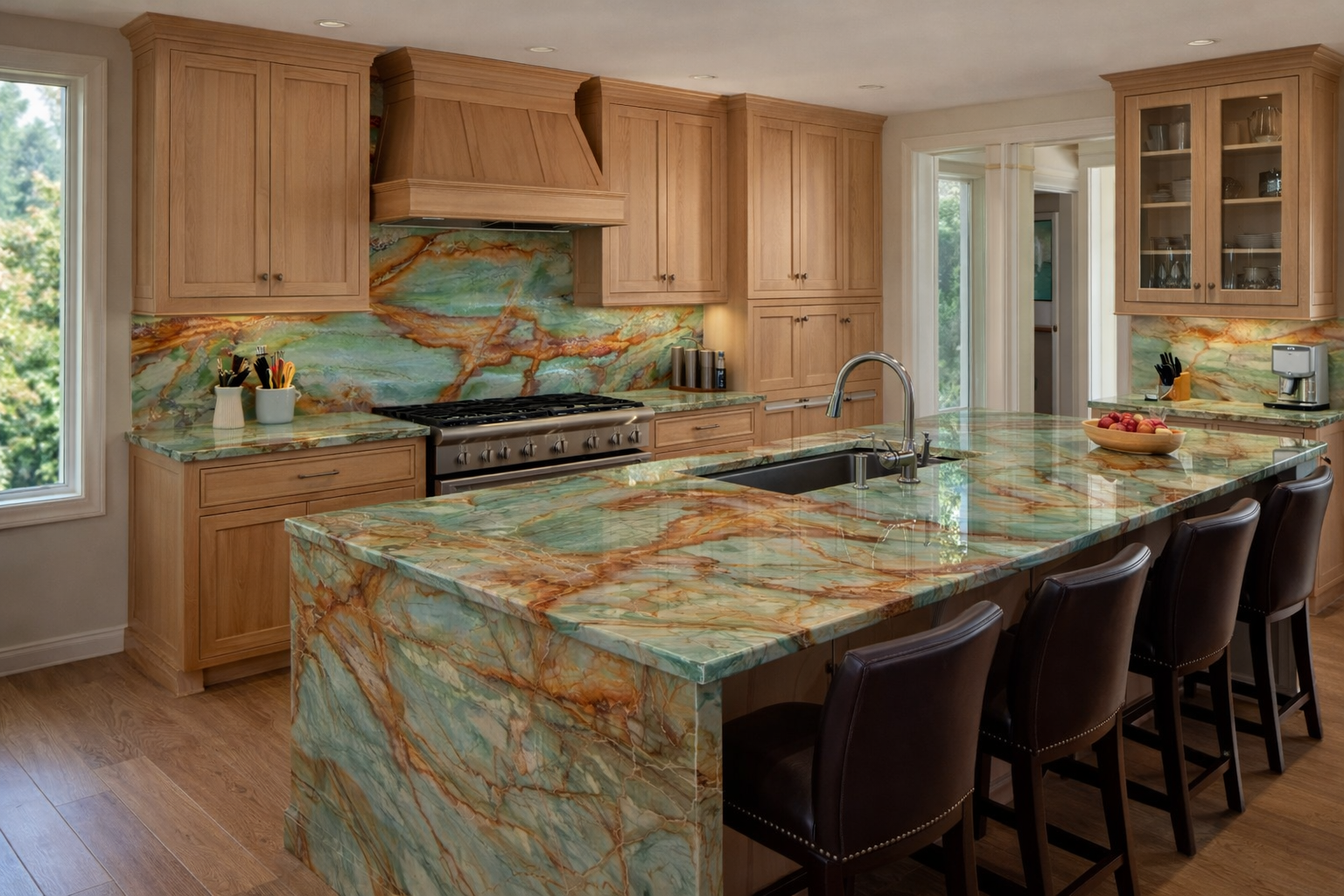
Color variety: ranging from classic white and soft gray to deep red, sage green, and deep blue tones.
Maintenance
Day-to-day cleaning requires nothing more than warm water and mild soap. No special products needed. Sealing quartzite, once or twice a year, is recommended but not required.
Quartzite store
Visiting our quartzite store in Austin, you'll find an expertly curated selection of slabs sourced directly from Brazil and other premier quarries around the world. Hand-selected for quality, veining, and consistency.

Granite in Austin
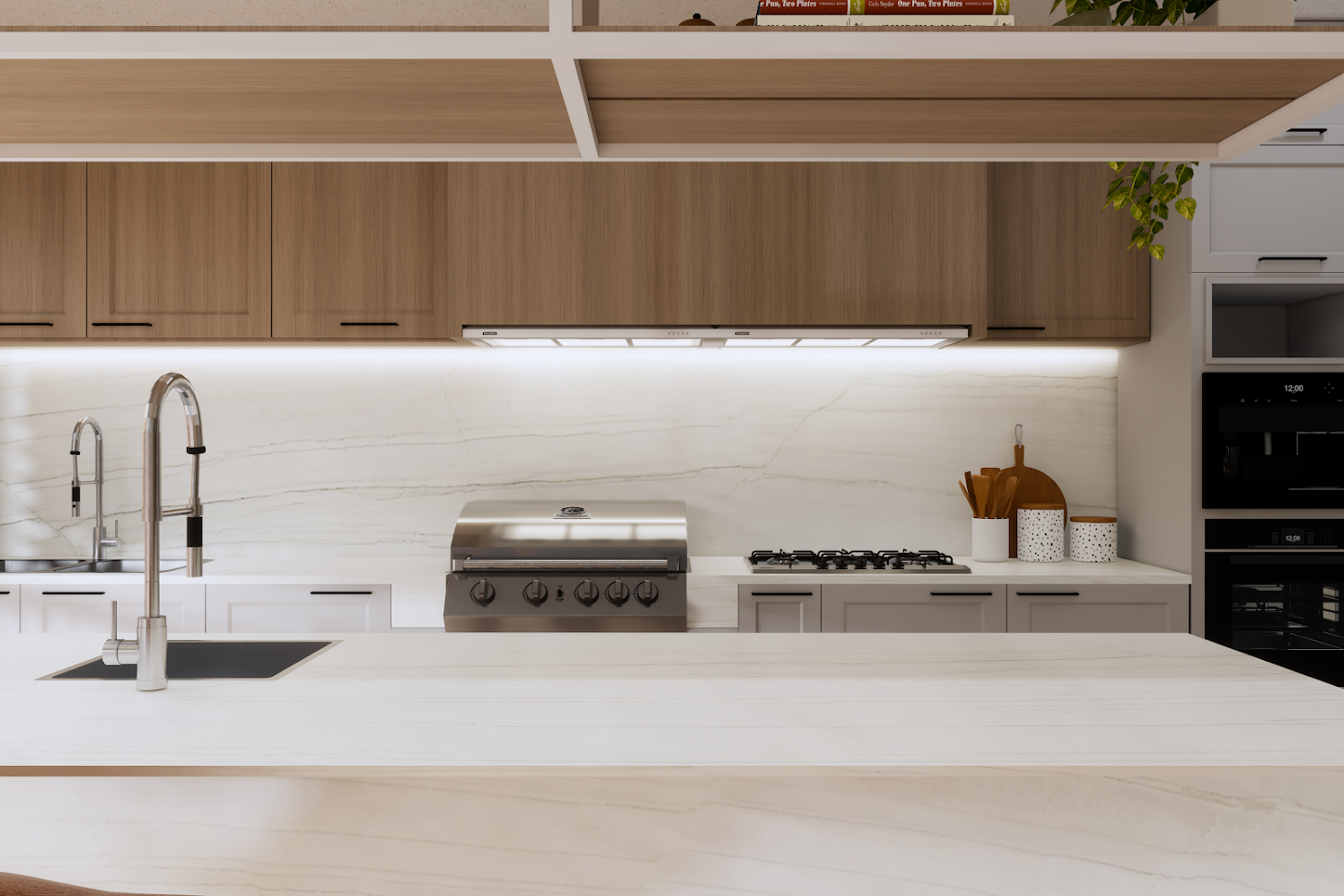
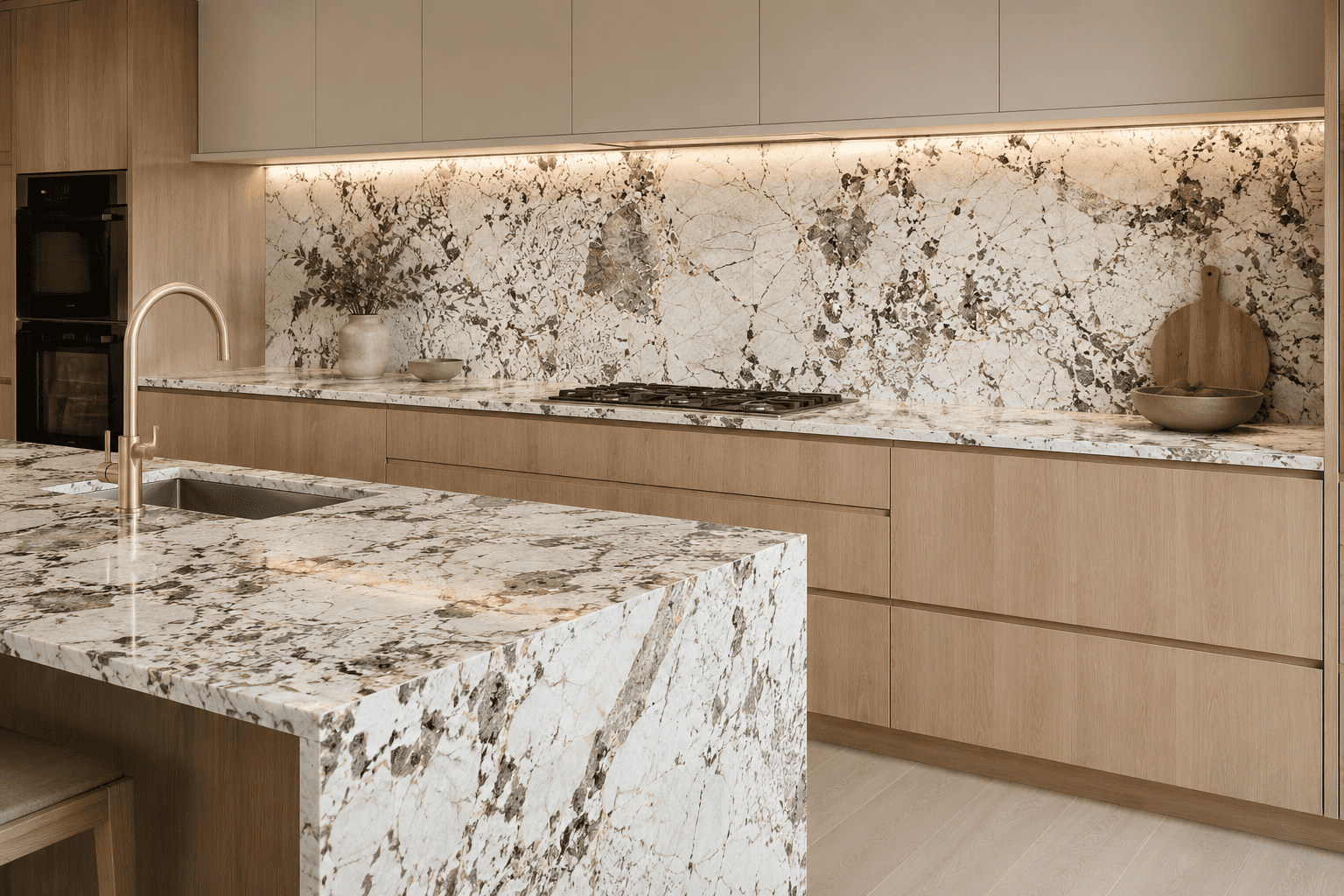
Granite has earned its place as one of the most trusted countertop materials on the market and for good reason. This igneous rock, formed deep beneath the earth's surface over millions of years, delivers a unique combination of beauty, resilience, and versatility that suits everything from rustic farmhouse kitchens to modern, minimalist spaces. Its volcanic origins make it nearly indestructible against heat and daily wear, which is why granite in Austin remains a staple in luxury renovations year after year.
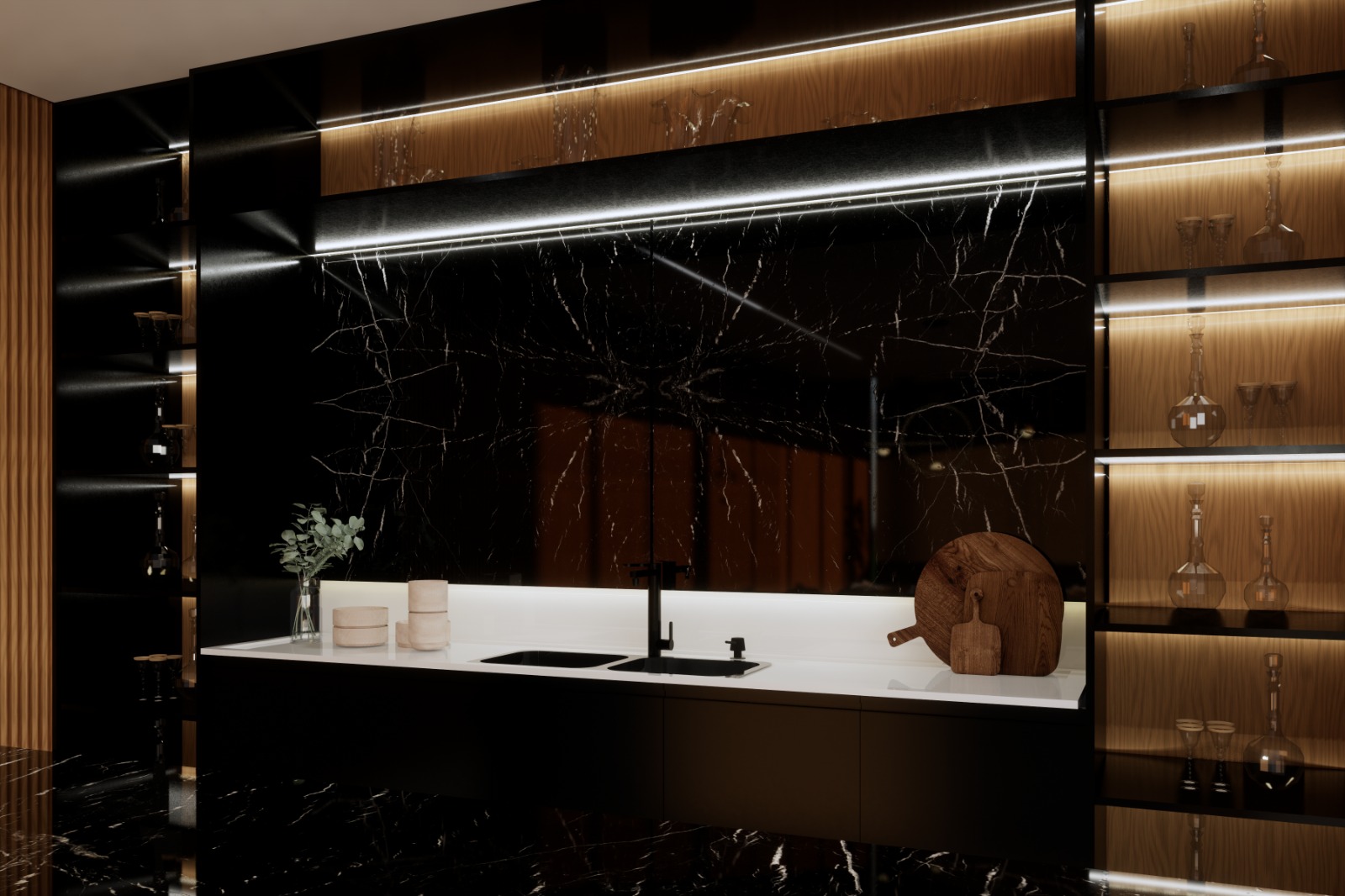
At Unique Stone Boutique, our granite store carries slabs that span a wide spectrum, from deep, starry blacks to earthy siennas, offering a palette to match any design vision. Whether you're drawn to bold, dramatic patterns or subtle, understated tones, granite delivers classic beauty alongside worry-free maintenance, making it a perfect choice for kitchen countertops that need to perform as beautifully as they look.
Why granite remains a top choice
Scratch resistance: one of the few natural surfaces that can withstand heavy-duty kitchen use.
Heat tolerance: pots and pans can be placed directly on the surface without risk of damage.
UV stability: granite won't fade under direct sunlight, making it suitable for outdoor kitchens.
Each slab is unique: the mineral composition varies from block to block, guaranteeing individuality.
Wide color range: virtually every design palette can be matched with the right granite selection.
Maintenance
Granite benefits from annual sealing to maintain its stain resistance. It's one of the lower-maintenance natural stone options, requiring only basic cleaning in day-to-day use.
Your granite store in Austin
Not all granite stores are created equal. At Unique Stone Boutique, every slab on our floor has been hand-selected for quality, character, and consistency — sourced from the brazilian quarries and brought to Austin for homeowners and designers who refuse to settle.
Marble
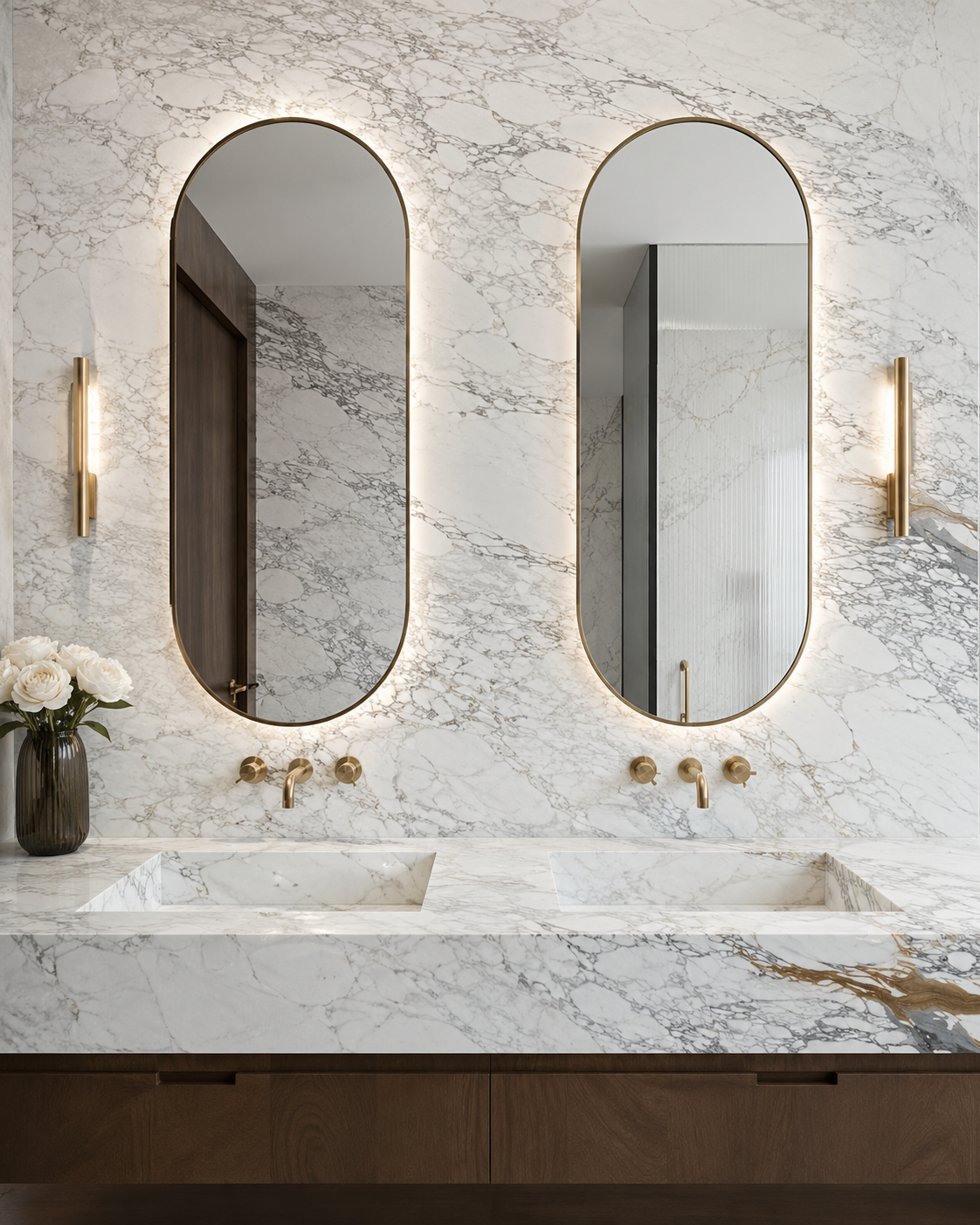
Marble has graced the halls of ancient palaces, the floors of world-class museums, and the kitchens of design-forward homes for centuries. Marble in Austin is for those who understand that beauty and character go hand in hand, even when that character develops over time.
Marble is a metamorphic rock derived from limestone, transformed by heat and pressure into a material of extraordinary elegance. Its signature veining, formed by mineral impurities moving through the stone during its formation, is utterly unrepeatable. No two marble slabs have the same lines.
The case for marble
Translucence: Its natural glow adds depth and sophistication unmatched by other stones.
Color range: from classic whites and grays to bold blacks and greens, marble adapts to any design vision.
Easier to shape and carve: its relative softness makes it perfect for custom edges and artistic detail.
Timeless investment: well-maintained marble increases in perceived value over time.
A note on maintenance
Marble is softer than quartzite or granite, which means it can etch when exposed to acidic liquids and scratch under heavy impact. It requires more attentive care — wiping spills promptly, using cutting boards, and sealing regularly.
Quartz Countertops in Austin
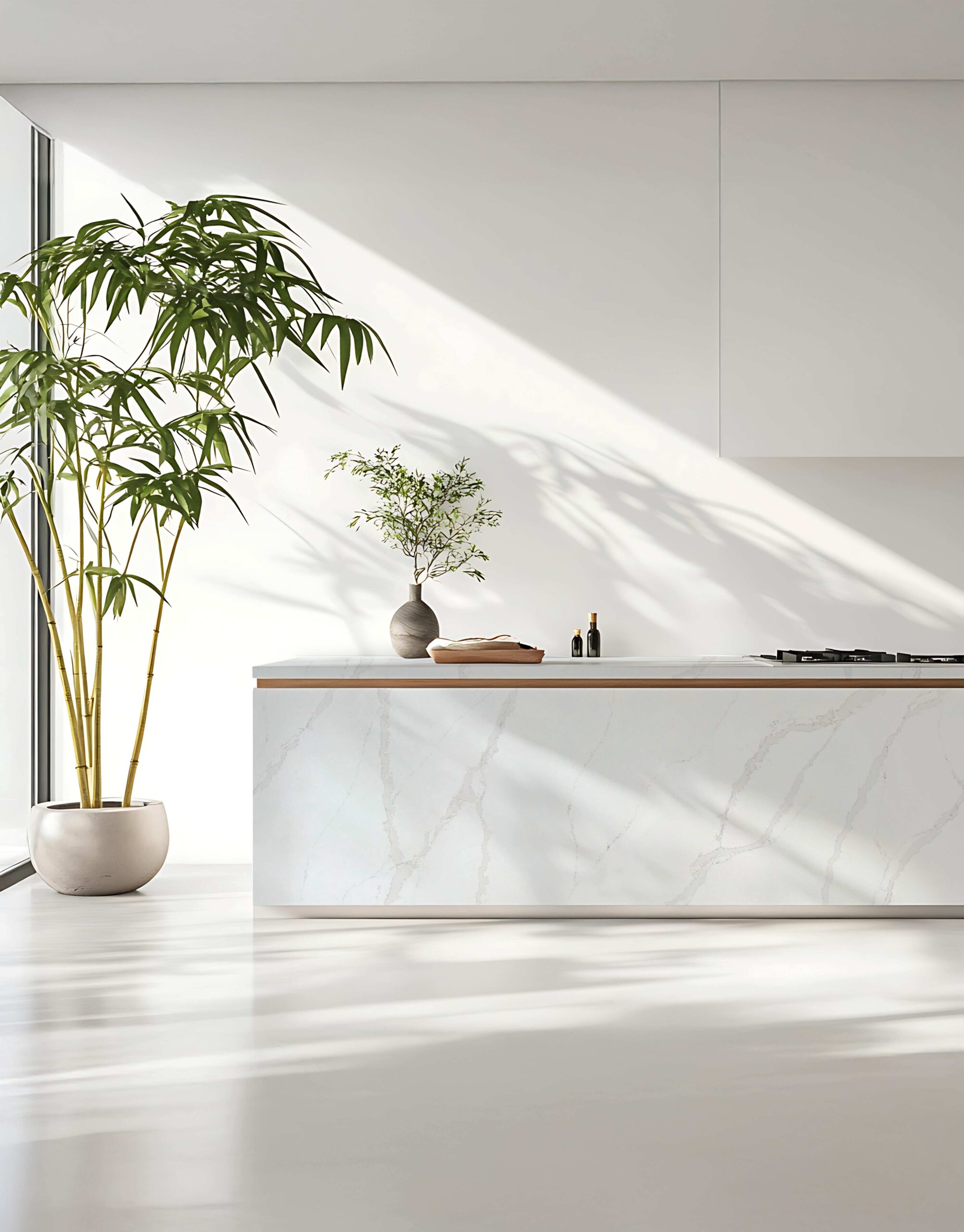
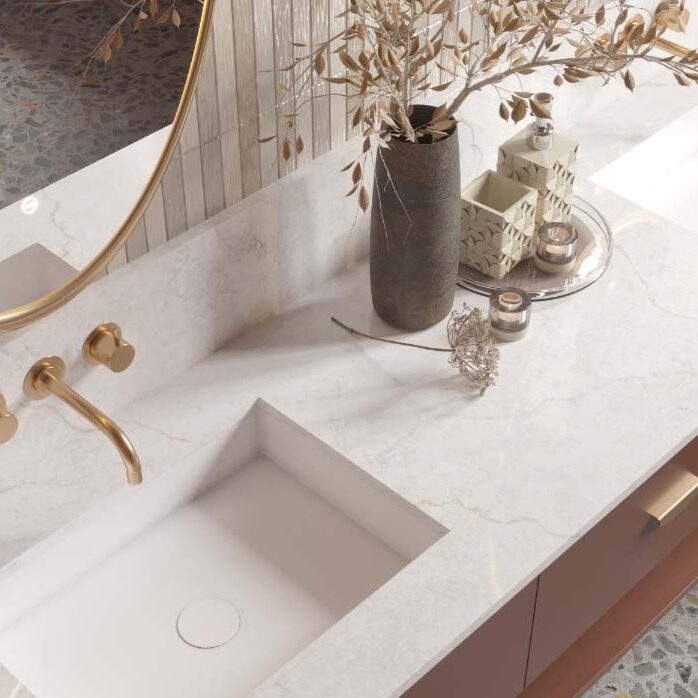
While our passion for natural stone is deep, we recognize that many modern designs benefit from the engineered precision of Quartz. Unlike quartzite countertops in Austin, which are sliced from raw Earth, Quartz is a high-tech surface engineered for consistency and ease of use.
Engineered quartz countertops are manufactured from approximately 90–95% ground quartz mineral, bound together with polymer resins and pigments in a controlled process. The result is a highly consistent, non-porous surface engineered to perform.
Quartz vs. Quartzite: What's the difference?
This is one of the most common questions we hear at our countertop store in Austin and it's an important one, because despite the similar names, these two materials are fundamentally different.
- Quartzite is a 100% natural stone. It begins as sandstone and is transformed over millions of years by extreme heat and pressure deep within the earth, emerging as one of the hardest and most durable natural surfaces available. Every slab is unique, shaped entirely by nature, with veining and movement that cannot be replicated.
- Engineered quartz, on the other hand, is a manufactured product. It's made by binding ground quartz mineral, one of the hardest minerals on earth, with polymer resins and pigments in a controlled factory process. The result is a highly consistent, non-porous surface designed for performance and uniformity.
Where quartz excels
Non-porous: resists stains from wine, coffee, and oils without sealing.
Hygienic: does not harbor bacteria or mold, ideal for food prep surfaces;
Color consistency: manufactured uniformity means you can match patterns across large surface areas.
Low maintenance: warm water and mild soap are all you need for everyday cleaning. No special products, no annual sealing.
Design range: available in looks that mimic marble, concrete, and solid-color modern aesthetics.
Adds home value: quartz countertops are a sought-after feature in modern homes, making them a smart investment that appeals to buyers and elevates resale potential.
Important consideration
Because quartz contains resin binders, it is vulnerable to sustained direct heat. Always use trivets under hot pots and pans. Prolonged heat exposure can warp or discolor the surface. Additionally, quartz is not recommended for outdoor applications, as UV exposure can cause fading over time.
Quartz store in Austin
Engineered quartz requires precision in sourcing, because consistency is only as good as the supplier behind it. At Unique Stone Boutique, we carry a curated selection of quartz surfaces chosen for their finish quality, color depth, and long-term performance. Stop by and let our team guide you through the collection. Even an engineered surface deserves a boutique experience.
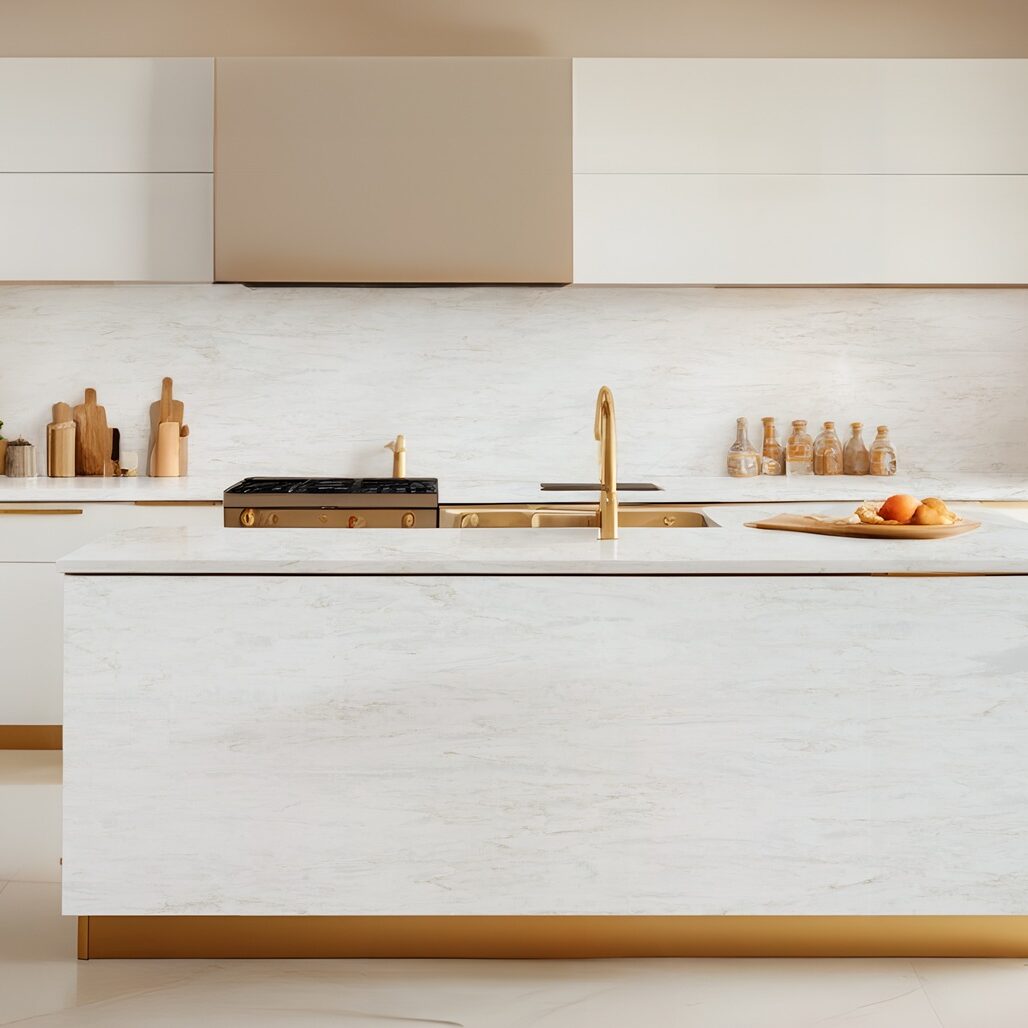
Soapstone
Soapstone occupies a unique niche in the world of countertop materials and for the right project, nothing else compares. This natural metamorphic rock is named for its characteristic smooth, almost velvety feel, and it carries a palette of elegant grays, soft blues, and muted greens.
Unlike most natural stones, soapstone is naturally non-porous. It doesn't require sealing to resist stains or moisture, which makes it genuinely low-maintenance in the traditional sense. It is completely impervious to acids, like wine, lemon juice, and vinegar leave no mark on soapstone, making it an exceptional choice for bar tops and butler's pantries.
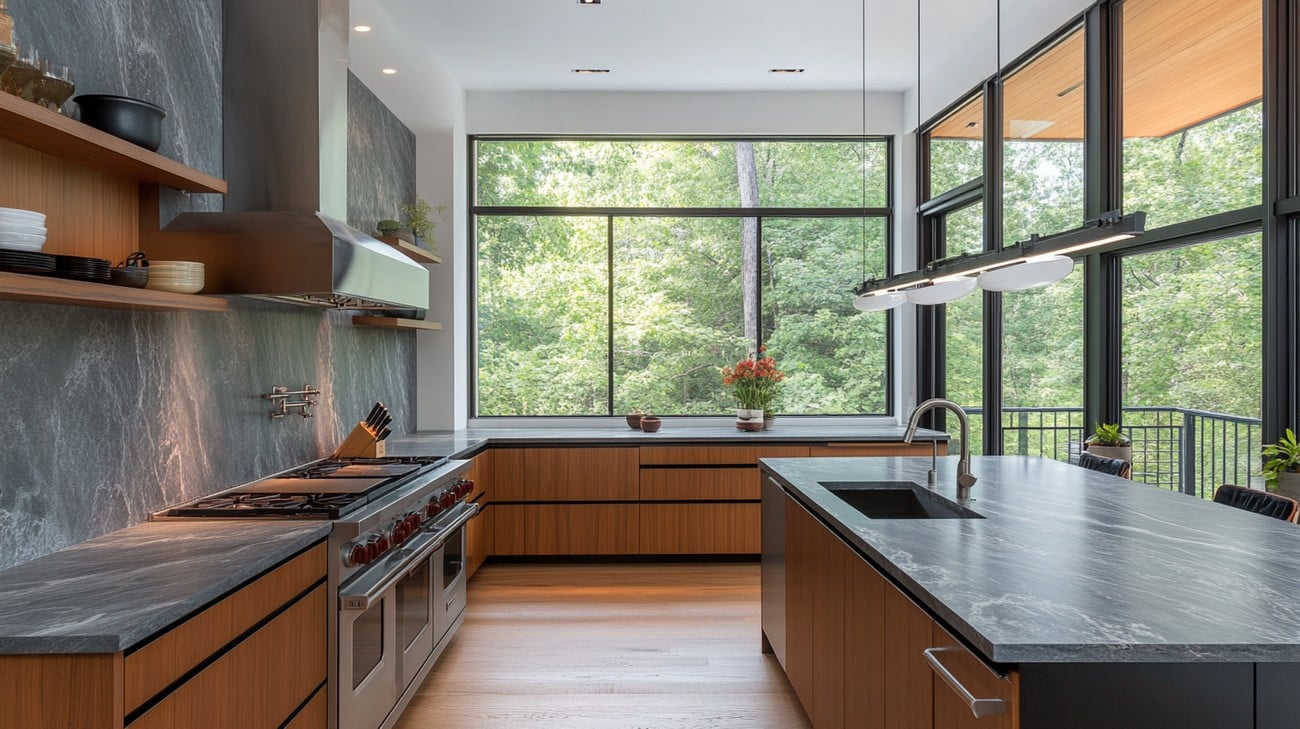
Key characteristics of Soapstone
No sealing required: its natural composition repels moisture and stains without treatment.
Acid-proof: ideal for wet bars, entertaining areas, and spaces where spills are frequent.
Distinctive aesthetic: its matte, muted tones create a quiet, sophisticated look.
Develops patina naturally: the stone darkens and ages gracefully, gaining character over time.
Care note
Soapstone is softer than granite or quartzite and will scratch more easily. Optional application of mineral oil helps the stone age evenly and can conceal minor surface marks. Without oiling, the stone darkens unevenly — a look some homeowners genuinely prefer as a signature of lived experience.
How to choose the right countertop for your project?
The best countertop is the one that fits your life, not just your aesthetic. Here are a few questions to guide your decision:
Do you cook frequently and use high heat?
Quartzite is the top choice. It handles extreme heat without damage and never needs a trivet. Granite is equally reliable for high-temperature cooking.
Do you want zero maintenance?
Quartzite is surprisingly low-maintenance for a natural stone. Periodic sealing is recommended but far from mandatory. If you want absolutely no sealing ever, engineered quartz is your answer.
Is visual drama your priority?
Quartzite natural veining, depth, and movement are unrepeatable; every slab is a one-of-a-kind piece. Marble is a close second for those drawn to a more classic, refined elegance.
Do you want consistent pattern matching across a large surface?
Engineered quartz offers the most predictable and uniform appearance, ideal for large islands or seamless installations.
Looking for the perfect kitchen countertops?
Quartzite is the ultimate choice for kitchen countertops in Austin. It withstands the heat of busy cooking sessions, resists acid from everyday spills, and maintains its beauty under heavy daily use.
Are you designing a bar, wine room, or entertaining area?
Soapstone is purpose-built for this. Its acid-proof nature means spills don't leave a trace.
Do you want a surface that only gets more beautiful with time?
Quartzite develops a subtle patina that enhances its character over the years. A living surface that tells the story of your home.
Visit Austin's premier countertop store
Finding the right surface for your home is an experience and we're here to make it an exceptional one. At Unique Stone Boutique, every slab in our collection is hand-selected for quality, veining, and character.
Our stones are sourced directly from Brazil, home to some of the world's most breathtaking quartzite and granite quarries. Our founder and CEO is Brazilian, and that heritage shapes everything about the way we curate our collection: with an insider's eye a direct relationship with the source, and an uncompromising standard for what exceptional stone truly looks like before it ever reaches our showroom floor.
We work with homeowners, designers, and contractors across Austin and Central Texas to bring these premium natural stone and engineered surfaces to residential spaces that deserve the best.
2200 Grand Avenue Pkwy, Suite 103, Austin, TX, 78728
Mon–Fri: 8:30 AM – 5:00 PM | Sat: 10:00 AM – 2:00 PM
Office: (512) 599-8979 | Sales: (512) 887-2111 / (737) 423-3655
sales@uniquestoneboutique.com | michelle@uniquestoneboutique.com
*More information about the use of natural stone can be found on the National Stone Institute.