
Marble Feature Wall Ideas That Feel Timeless
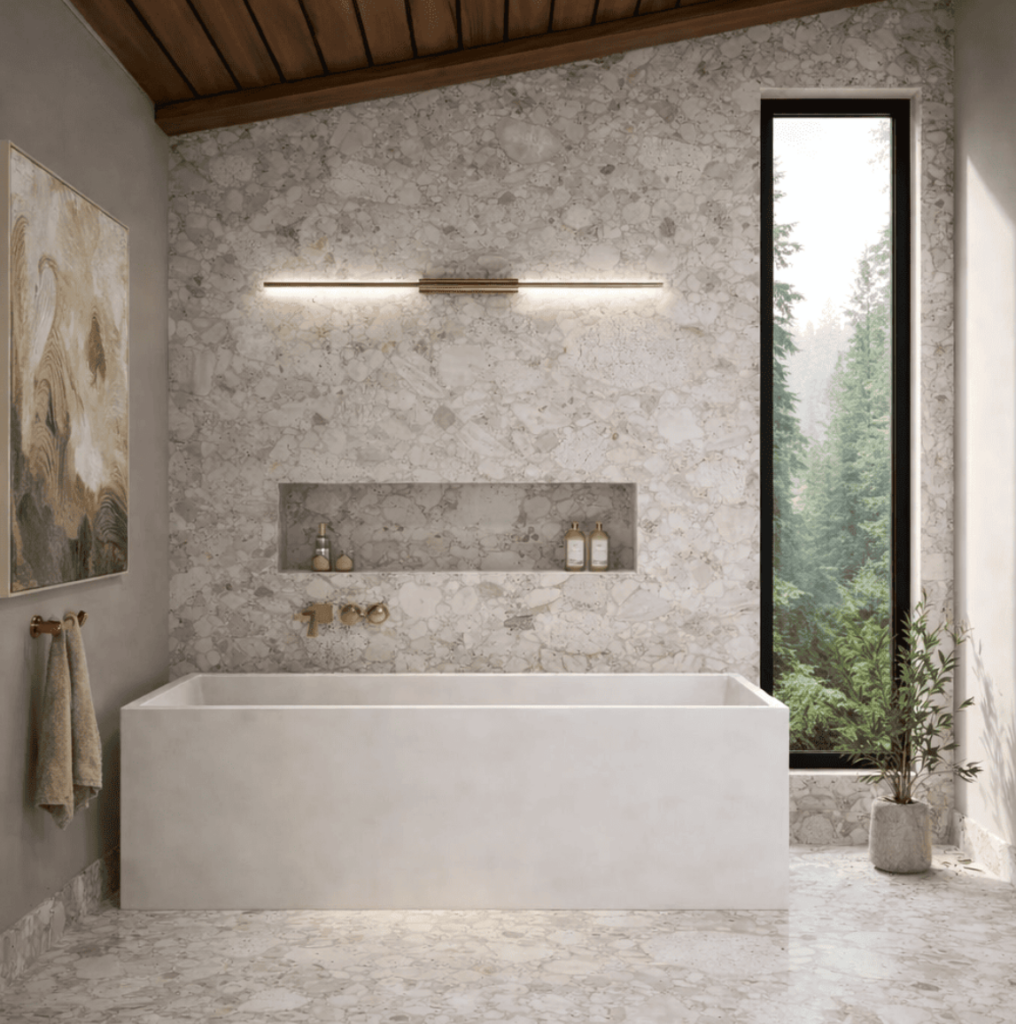
A marble feature wall is not a background element. It is a defining material moment: a dramatic sweep of natural veining behind a fireplace, a quiet bookmatched statement in a primary bath, or a floor-to-ceiling surface that gives an entry the presence of a gallery. When chosen thoughtfully, marble brings movement, depth, and a sense of permanence that painted drywall simply cannot replicate.
The strongest results come from treating the wall as a composition, not just a finish selection. The slab, its orientation, the surrounding materials, the lighting, and the installation details all shape how marble will live in the room.
Where a Marble Feature Wall Makes the Greatest Impact
Marble is most compelling where the eye naturally lands or where a room needs a clear focal point. Fireplace surrounds are an enduring choice because the stone gives an architectural anchor to a living room without requiring extra ornament. A continuous slab installation can extend from the hearth to the ceiling, making even a straightforward fireplace feel tailored and substantial.
In bathrooms, marble works beautifully behind a freestanding tub, at a vanity wall, or inside a shower. The natural variation softens the hard geometry of tile, glass, and cabinetry. For a more immersive design, designers may carry the same marble from the vanity backsplash onto one full-height wall, allowing the room to feel cohesive rather than overly segmented.
Other smart applications include a formal dining wall, a wine display backdrop, a powder room accent wall, or a kitchen feature wall beyond the standard backsplash. In open-concept Austin homes, stone can also define a zone without adding a physical divider. A carefully selected slab behind a bar or dining banquette introduces visual structure while keeping the floor plan open.
Choosing Marble for the Room, Not Just the Sample
A small sample can show marble’s color family, but it cannot communicate the character of an entire slab. Veining may be delicate and linear, bold and branching, cloud-like, or richly layered. That movement is precisely what makes natural stone special, and it is why viewing the full slab matters before a marble feature wall is specified.
Consider the scale of the veining
Large-format walls generally benefit from movement that can be appreciated at a distance. Fine, quiet veining can look elegant in a powder room or smaller niche, while a broad fireplace wall may call for a slab with stronger direction and contrast. Neither is inherently better. The right choice depends on whether the stone is meant to lead the room or support the furnishings around it.
White marble with gray veining remains a classic choice, especially alongside warm oak, black metal, creamy plaster, or soft neutral upholstery. Yet marble is not limited to that familiar look. Warmer varieties with taupe, gold, green, or burgundy undertones can bring remarkable depth to a traditional home, a moody study, or a contemporary interior that needs more warmth.
Think about finish and light
A polished finish reflects light and heightens color contrast, lending a formal, luminous quality to the wall. It is particularly effective in entries, dining spaces, and bathrooms where light can move across the surface. A honed finish has a softer, more matte appearance that can feel understated and architectural.
Natural stone changes with the day. Before finalizing a selection, consider the room’s window exposure, recessed lighting, sconces, and fireplace glow. A slab that appears cool under showroom lighting may reveal warmer undertones in a sunlit room. Reviewing the full slab in person helps homeowners and designers make that decision with confidence.
Bookmatching Creates a More Intentional Statement
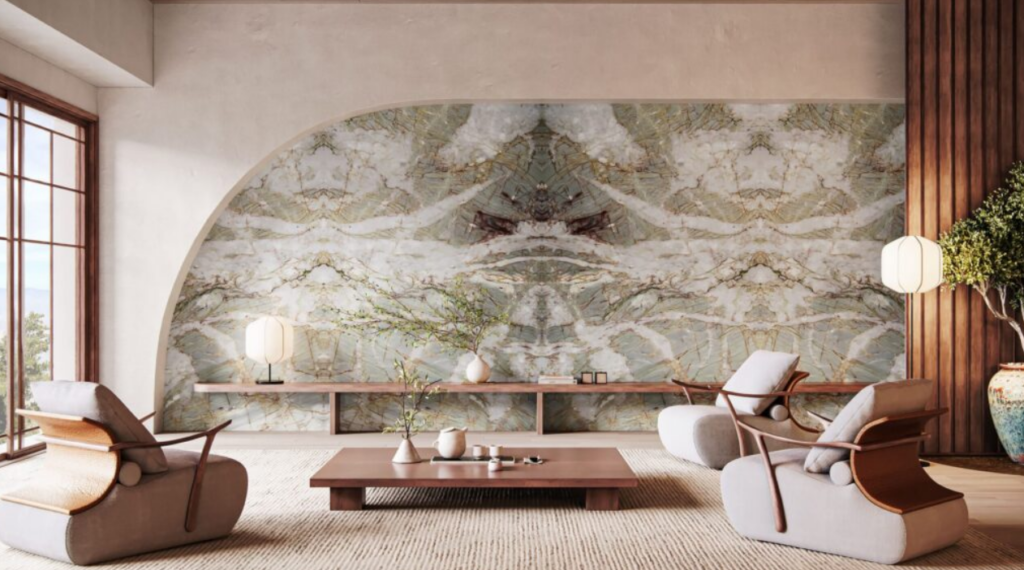
Bookmatching is one of the most striking ways to install marble on a feature wall. Two slabs are cut and opened like pages in a book, creating mirrored veining across the center seam. The effect can feel like a piece of natural artwork, particularly when the pattern has a strong central movement.
This approach is ideal for fireplace walls, large shower walls, and primary bath focal points. It does require careful planning. The fabricator must assess the slabs together, map the cuts precisely, and determine where seams will fall. Bookmatching can create dramatic symmetry, but it is not always appropriate. A marble with gentle, irregular movement may look more natural when installed in a continuous directional flow rather than mirrored.
The same consideration applies to vein direction. Vertical veining can visually heighten a low ceiling, while horizontal movement may make a narrow wall feel wider. During slab selection, ask to see the material upright, as it would appear on the wall. A slab viewed flat in a warehouse can read very differently once it is installed vertically.
Details That Keep the Design Refined
The most polished marble walls are often defined by details that are easy to overlook during early planning. Seams should be placed with the composition in mind, not merely where they are convenient. On a fireplace, for example, a centered seam may feel deliberate within a bookmatched layout, while an off-center seam can interrupt the visual flow.
Edge treatments deserve equal attention. A simple eased edge can preserve a modern, minimal look. A mitered return creates the appearance of a thicker solid-stone element around a firebox or recessed niche. If the wall includes shelving, a television, sconces, or a mounted mirror, those elements should be coordinated before fabrication begins. Retrofitting openings after installation is rarely the cleanest path.
Grout and adjacent materials also matter. Large-format slab walls minimize grout lines, which is part of their appeal. If marble is paired with tile, cabinetry, or plaster, choose transitions that feel quiet and purposeful. A narrow shadow reveal, a slim metal trim, or a clean caulk joint can be more sophisticated than a busy border.
Marble’s Practical Considerations
Marble is a natural material, and its beauty comes with honest characteristics. Many marbles are more porous than engineered surfaces and can etch when exposed to acids. Etching is a dulling of the finish rather than a stain, and it is most relevant on horizontal surfaces that see food, drinks, and daily cleaning.
On a vertical feature wall, marble typically faces far less wear. A sealed wall behind a fireplace, in an entry, or above a vanity is generally straightforward to maintain with a soft cloth and a stone-safe cleaner. In showers, thoughtful sealing, proper waterproofing behind the stone, and attentive installation are essential. Marble can perform beautifully there, but it should be selected and detailed with realistic expectations about maintenance and natural variation.
For walls where moisture, frequent contact, or a highly uniform look is the priority, quartz may be worth considering as an alternative. Premium quartz can offer reliable consistency and lower-maintenance performance, though it will not reproduce the depth, mineral variation, and one-of-a-kind movement of genuine marble. The decision is personal: some clients want the expressive authenticity of natural stone, while others prefer a more controlled appearance.
Make the Selection Experience Part of the Design Process
A marble wall should not be chosen from a thumbnail image or a small showroom chip alone. Full slabs reveal the features that make the installation memorable: the unexpected ribbon of color, a soft clouded field, or the vein that becomes the center of a bookmatched composition.
At Unique Stone Boutique, homeowners, designers, and trade professionals can review carefully hand-selected marble slabs in person and discuss how a specific material will translate to the finished wall. Bringing cabinet samples, flooring, paint colors, hardware, and inspiration images to the appointment makes the conversation more productive. It also helps identify whether the stone should be the room’s boldest gesture or a more restrained layer within a larger design. Check our live inventory for the latest marble slabs specially curated for you.
A feature wall is an opportunity to choose a material with a point of view. Let the full slab lead the decision, plan the composition before fabrication begins, and give the stone enough visual space to do what only natural marble can do.