
A Guide to Waterfall Island Stone Design
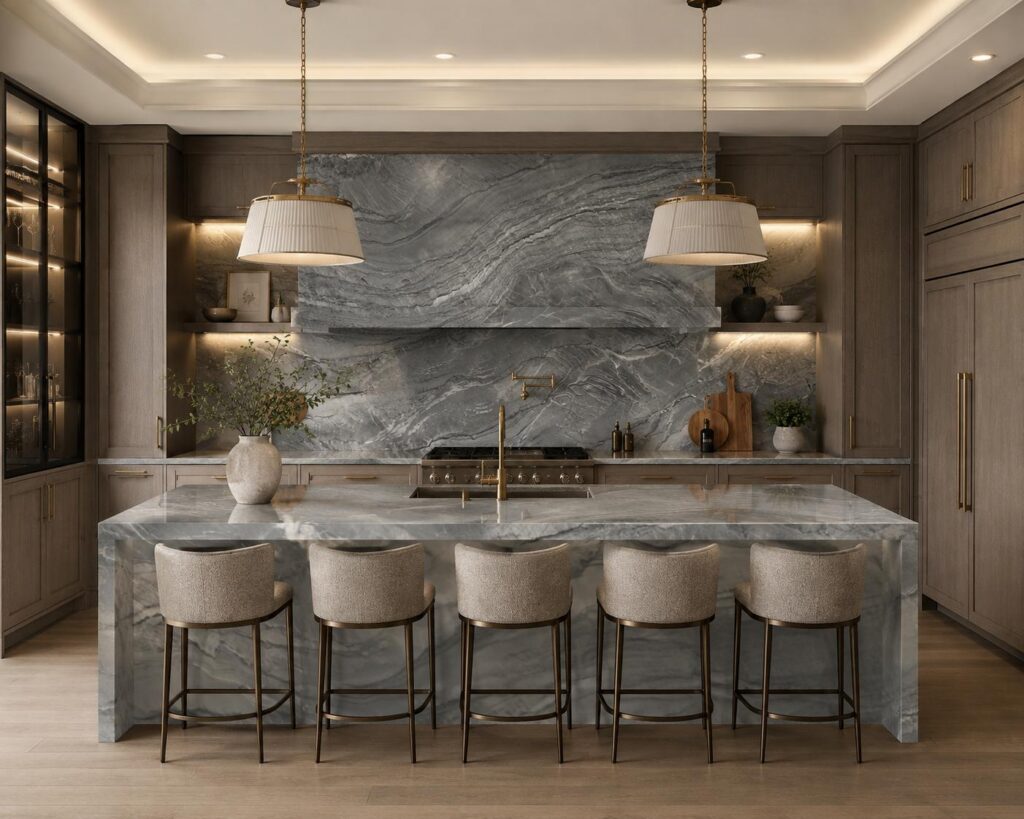
Island with waterfall
A kitchen island becomes architecture when the countertop surface continues down its sides to the floor. This guide to waterfall island stone is designed to help you make that statement with intention, from selecting the right slab to planning the seams, overhangs, and daily use that determine whether the finished island feels exceptional.
A waterfall island is visually simple but technically demanding. The stone is not merely installed on a horizontal plane. It is carried over the island edge and fabricated into vertical panels, creating a continuous, tailored frame around the cabinetry. In an open-concept home, that detail can anchor the entire kitchen and create a strong connection to adjacent living spaces.
What Defines a Waterfall Island Stone Design
A waterfall edge occurs when the countertop material turns down at one or both ends of an island. The vertical stone panel typically reaches the finished floor, concealing the cabinet side and giving the island the presence of a custom furniture piece.
The most compelling installations treat the top and sides as a single composition. Veining can appear to travel from the counter down the edge, while a quieter material can emphasize clean lines, texture, and proportion. Either approach can be beautiful. The right choice depends on the stone’s movement, the scale of the island, and how much visual activity already exists in the room.
A full waterfall design on both ends creates symmetry and a more formal architectural presence. A single waterfall end is often the better choice when an island needs open seating on one side, meets a wall, or benefits from a more restrained profile. There is no universal rule. The strongest design is one that respects circulation, cabinetry layout, and the way the kitchen will be used.
Choose Stone for the Way You Live
Material selection should begin with the character you want the island to bring to the room, then move quickly to performance. A waterfall edge puts a large amount of surface in view, so the slab’s color, movement, and finish matter more than they might on a small perimeter counter.
Quartzite for natural movement and durability
Quartzite is a favored choice for clients who want the depth and variation of natural stone with strong performance in a hardworking kitchen. Carefully hand-selected quartzite can offer dramatic linear veining, crystalline texture, or soft cloud-like movement that becomes especially striking when it continues down a waterfall leg.
Not every quartzite has the same density or surface behavior, which is why slab-by-slab guidance matters. A knowledgeable selection process helps identify materials that suit both the desired look and the practical demands of the space.
Marble for a softer, expressive statement
Marble has an unmistakable elegance. Its veining and luminous surface make it a natural fit for a showpiece island, particularly in kitchens where patina is welcome and appreciated. It does require a realistic conversation about etching and staining. For some homeowners, the evolving character is part of marble’s appeal. For others, a marble-look quartz or a resilient quartzite may better support the household’s routines.
Granite and soapstone for distinctive character
Granite can bring depth, mineral variation, and dependable performance to a waterfall island. It is an excellent option when the goal is natural stone with a more grounded, richly textured presence.
Soapstone offers a different kind of luxury: velvety, tactile, and quietly sophisticated. Its dark tones and gentle movement can create a beautiful contrast against light oak, walnut, or painted cabinetry. Because it develops character over time, it is best for homeowners who value a lived-in, authentic surface rather than a perfectly unchanged finish.
Quartz for controlled color and consistency
Premium quartz is well suited to kitchens seeking a clean, consistent field of color or a refined interpretation of natural stone. It can be particularly effective in contemporary interiors where the waterfall should read as crisp and sculptural. Quartz also offers practical advantages for busy households, though it should still be protected from excessive heat and treated with the care appropriate for any finished surface.
Vein Matching Is the Detail That Changes Everything
For heavily veined material, a waterfall island succeeds or fails at the miter. A mitered edge is created by cutting the countertop and vertical panel at complementary angles so they meet with a narrow, refined seam rather than exposing the slab’s thickness.
The fabricator’s layout determines how the material appears to move through that corner. A book-matched or vein-matched layout can make the pattern feel continuous as it turns from the top to the side. This takes planning before cutting begins. The slab must be viewed in person, the intended island dimensions must be confirmed, and the direction of the movement must be discussed with the fabricator.
Natural stone is never a printed pattern. Veins may widen, soften, intersect, or change direction across a single slab. That variation is exactly what makes the material special, but it also means a digital sample cannot replace an in-person review. At Unique Stone Boutique, clients are encouraged to look beyond the center of a slab and consider the sections that will actually become the island top and waterfall panels.
For a calm material, vein matching may be less important than grain direction, finish consistency, and the placement of natural features. A honed soapstone waterfall, for example, may rely more on the continuity of its subtle texture than on a dramatic visual line.
Plan the Island Before Selecting the Slab
A waterfall edge affects more than appearance. It changes the functional footprint of the island and should be considered alongside seating, appliance placement, storage, and room circulation.
Start with the overhang. If the island includes stools, confirm that the seating area remains comfortable and that the waterfall panel does not interfere with knee clearance at either end. A full-height stone leg can make an island feel substantial, but it may limit seating flexibility if it is placed where someone expects to sit.
Also consider outlets, switches, and access panels early. Electrical requirements do not disappear because the island is wrapped in stone. Thoughtful planning can place necessary components discreetly, often on a less visible side, without interrupting the strongest view of the waterfall edge.
Cabinetry and substructure deserve equal attention. Stone is heavy, and waterfall panels require proper support, level installation surfaces, and coordination between the cabinetmaker, fabricator, contractor, and designer. The finished seam can only look precise when what sits behind it is properly prepared.
Let the Surrounding Materials Support the Stone
Because a waterfall island commands attention, the rest of the kitchen should create balance rather than competition. This does not mean everything must be quiet. It means each material needs a clear role.
A boldly veined quartzite can pair beautifully with simple perimeter countertops, understated backsplash tile, and cabinetry with minimal door detail. Conversely, a soft white or solid-tone waterfall island can support a more expressive backsplash, warm wood cabinetry, or decorative lighting.
Finish also changes the conversation. A polished surface reflects light and heightens color contrast, making a dramatic slab feel even more expansive. A honed finish diffuses light and often gives the island a more relaxed, tactile quality. Neither is inherently better. Polished finishes tend to emphasize movement, while honed finishes can feel more architectural and forgiving in spaces designed around natural textures.
Installation Details Worth Discussing
A waterfall island may look monolithic, but it is built from carefully fabricated pieces. The quality of the finished result depends on details that are easy to overlook during the design phase.
Discuss the desired edge profile. Most waterfall islands use a clean mitered edge, but the apparent thickness can vary. A slimmer profile feels modern and light, while a thicker-looking miter can add presence and complement larger-scale cabinetry. Confirm how corners will align, where seams will fall, and whether the stone panel will sit flush with the cabinet face or project slightly beyond it.
Flooring coordination matters as well. In many remodels, the waterfall legs are installed over the finished floor. In others, the flooring terminates at the island structure. Both approaches can work, but the decision affects measurements and installation sequencing. It should be resolved early, not on installation day.
If your island includes a cooktop, sink, or dishwasher, the stone selection deserves an additional performance review. Heat exposure, water management, cutout reinforcement, and access for service should all be considered before fabrication. The most beautiful stone is also the one that works confidently with the way your kitchen functions.
Care That Preserves the Finish
Daily care is straightforward: use a soft cloth, mild soap when needed, and clean water to remove residue. Avoid abrasive pads, harsh cleaners, and acidic products on natural stone. Use trivets beneath hot cookware and wipe spills promptly, especially oils, wine, citrus, and strongly colored foods.
Natural stones may need periodic sealing depending on the material and finish. Sealing helps resist absorption; it does not make a surface impervious to every spill or eliminate the need for attentive care. Quartz does not typically require sealing, but it benefits from the same common-sense approach to cleaning and heat protection.
A waterfall island is an investment in visual continuity, craftsmanship, and the experience of being in your kitchen. When you select the slab in person, study its movement, and coordinate the design details before fabrication, the result is more than a countertop with stone sides. It is a lasting focal point that gives the room a sense of intention every time you walk in.