
Engineered Stone Counter Tops Explained
A countertop decision usually starts with a photo and ends with a long list of practical questions. That is especially true with engineered stone counter tops, which are often chosen for their clean look, dependable performance, and wide design range. They photograph beautifully, but the real reason they remain a favorite in kitchen and bath design is simpler: they make daily life easier without asking you to compromise on style.
For homeowners and design professionals, that balance matters. A surface can be striking, but if it feels limiting in a hardworking kitchen or underwhelming in person, it will not hold up to the expectations of a finished space. Engineered stone has earned its place because it brings consistency, durability, and a refined aesthetic that works across many interior styles.
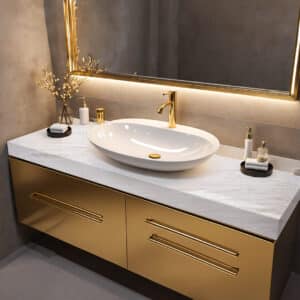
Miami Gold Quartz offers a breathtaking coastal aesthetic, featuring a soft, sandy-white background that feels light and expansive. Inspired by the serene movement of ocean waves, its linear, horizontal veining flows gracefully across the slab in warm gold and soft tan hues. This rhythmic pattern creates a sense of continuous motion, making it a standout choice for those looking to add a touch of sun-drenched luxury to their interiors.
What engineered stone counter tops actually are
Engineered stone is a man-made surface created by combining crushed natural quartz with resins and pigments. The result is a dense, nonporous material designed for interior applications like kitchen countertops, bathroom vanities, backsplashes, and other vertical and horizontal surfaces.
Many people use the terms quartz and engineered stone interchangeably. In most residential design conversations, that is perfectly normal. What matters more is understanding how the material behaves. Unlike marble or quartzite, engineered stone does not come from a quarry as a full slab with one-of-a-kind movement created by nature. It is manufactured to deliver a more controlled appearance and a more predictable performance profile.
That predictability is a major reason buyers are drawn to it. If you want a soft white surface with subtle veining, or a richer tone with a more contemporary finish, engineered stone offers a broad design palette without the variation that can make natural stone selection more complex.
Why engineered stone remains so popular
The appeal of engineered stone counter tops goes beyond looks. They fit the way many people actually live. In a busy kitchen, the fact that the surface is nonporous means it resists staining more easily than many natural stones. It does not require the same sealing routine that some homeowners want to avoid. For primary bathrooms, powder rooms, and family kitchens, that low-maintenance quality is often a deciding factor.
The visual consistency also gives designers more control. If a project calls for a quieter backdrop, engineered stone can deliver that with fewer surprises from slab to slab. That can be especially useful when the cabinetry, lighting, or tile already carries a lot of personality and the countertop needs to support the room rather than dominate it.
There is also a tactile reason people respond to it. Good engineered stone has a polished, composed feel. It reads as clean and intentional, which suits everything from warm transitional interiors to sharper contemporary spaces.
Where it performs best in the home
Kitchens are the most obvious application, and for good reason. Engineered stone handles everyday cooking, cleanup, and family use well when properly fabricated and cared for. It is a strong option for perimeter counters, islands, and full-height backsplashes when the goal is a cohesive, tailored look.
Bathrooms are another natural fit. Vanity tops made from engineered stone can maintain their appearance beautifully over time, especially in homes where an easy-care surface is a priority. In laundry rooms, mudrooms, and bar areas, it also performs well because it combines durability with a finished, high-end appearance.
Where buyers should slow down is around heat exposure and outdoor use. Engineered stone is not the best choice for exterior installations in the Texas climate, where UV exposure and temperature swings can affect color and performance. It is also wise to use trivets or heat protection in the kitchen rather than placing hot cookware directly on the surface. This is one of those details that matters more in real life than in a showroom conversation.
The trade-offs worth understanding
No countertop material is perfect for every project. Engineered stone has real advantages, but it also comes with limitations that should be part of an informed decision.
If you love the spontaneity and depth of natural stone, engineered surfaces may feel more controlled. Some designs do an excellent job mimicking marble-inspired veining, but the repetition and pattern structure can still read differently than a true quarried slab. For some clients, that consistency is the benefit. For others, it is exactly why they choose quartzite, marble, or soapstone instead.
Heat tolerance is another point to consider honestly. Engineered stone is durable, but it is not indestructible. Excessive direct heat can damage the resins that help bind the material. That does not make it fragile. It simply means it should be treated with the same level of respect you would give any premium surface in a well-designed home.
There is also the matter of edge style, finish, and fabrication quality. A beautiful slab can still feel ordinary if it is fabricated without care. The finished result depends heavily on selection, layout, and workmanship. That is why material guidance matters so much.
How to choose the right engineered stone look
The best engineered stone selections usually begin with the room, not the sample. Cabinet color, floor tone, wall finish, and natural light all affect how a slab will read once installed. A bright white surface in a showroom may feel crisp and elegant in one kitchen and too stark in another.
Start by deciding what role you want the countertop to play. If the space already includes expressive wood grain, patterned tile, or bold hardware, a quieter engineered stone can create balance. If the room is more restrained, a slab with more movement can add dimension without overwhelming the design.
It also helps to think in terms of scale. Fine, subtle patterning often suits smaller bathrooms and more minimalist interiors. Larger kitchens with long runs or expansive islands can support bolder veining, especially when the slab is thoughtfully laid out. In boutique showroom settings, seeing the full slab rather than a small sample makes a meaningful difference. It allows you to understand flow, variation, and how the material will present across the entire installation.
Engineered stone versus natural stone
This is rarely a matter of one being better than the other. It is usually a matter of fit.
Engineered stone is often the right choice when you want a polished, low-maintenance surface with controlled patterning and strong everyday usability. It suits clients who value design clarity and want confidence in how the material will perform.
Natural stone is often the right choice when uniqueness is the priority. Quartzite, marble, granite, and soapstone each bring their own visual character and tactile presence. They tend to offer more movement, more variation, and a stronger connection to the individuality of the slab itself.
For many homeowners, the decision comes down to how they want the room to feel. Engineered stone feels tailored and consistent. Natural stone feels organic and singular. Both can be luxurious. Both can be timeless. The right answer depends on your aesthetic, your lifestyle, and how much variation you want to embrace.
What a thoughtful selection process should include
A good countertop decision is not just about picking a color. It should include conversation around application, durability, finish, slab scale, edge detail, and how the material interacts with the rest of the home. That is especially important for clients building or remodeling at a high level, where every surface has to contribute to a larger design story.
In Austin and surrounding markets, where interiors often blend natural light, warm wood tones, and contemporary lines, engineered stone can be an excellent fit. But it works best when the selection process is personal and informed. Seeing full slabs, asking detailed questions, and working with people who understand both material performance and visual composition leads to better outcomes.
At a boutique showroom like Unique Stone Boutique, that guidance becomes part of the value. Carefully hand-selected materials and one-on-one support help narrow the field in a way that feels confident rather than overwhelming.
Care expectations once installed
Daily care is refreshingly straightforward. Mild soap, water, and a soft cloth are usually all that is needed for routine cleaning. Because the surface is nonporous, it does not ask for much. That simplicity is one of its strongest advantages.
Still, low maintenance does not mean no maintenance. Avoid abrasive cleaners, protect the surface from high heat, and use cutting boards instead of treating the countertop like a workbench. Small habits preserve the finish and help the surface look as polished years later as it did on installation day.
The best countertop choices are the ones that continue to feel right after the excitement of the remodel has passed. If you want a surface that delivers visual refinement, everyday practicality, and a more controlled aesthetic, engineered stone is worth serious consideration. The key is choosing it with intention, so the material supports not just the room you are designing, but the way you want to live in it.