
Can Quartzite Handle Kitchen Spills? The Real Answer
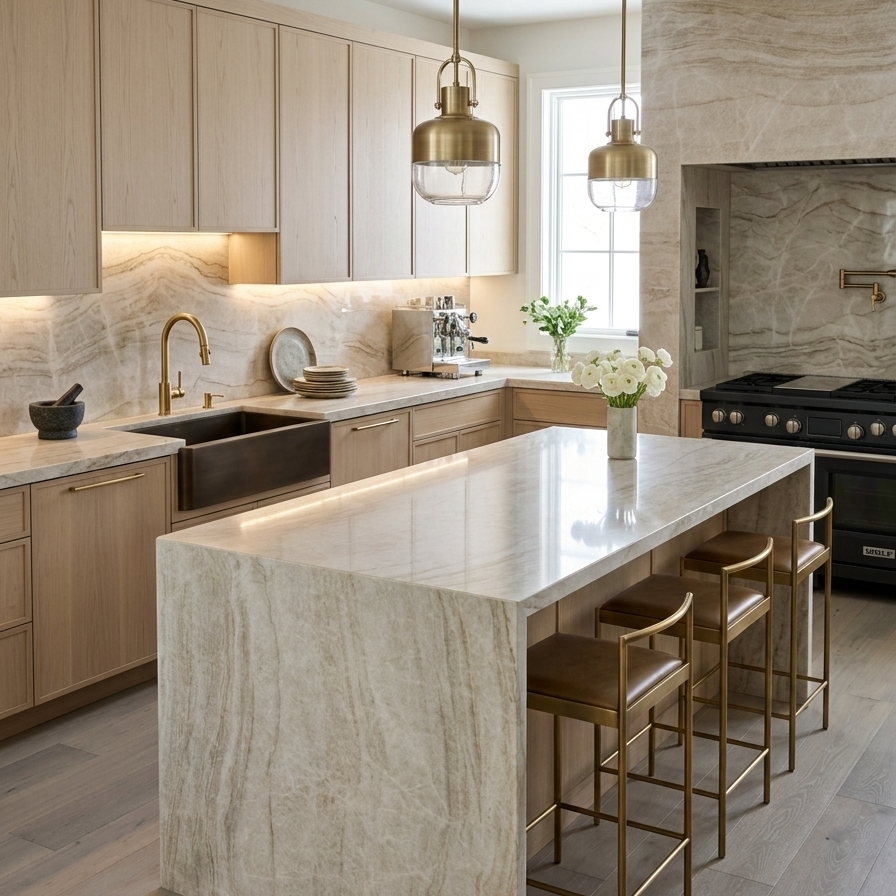
A glass of red wine tips near the island. Olive oil lands beside the cooktop. A lemon is sliced directly on the counter during a busy Saturday dinner. For homeowners considering natural stone, the practical question is clear: can quartzite handle kitchen spills without turning daily life into a maintenance project?
In most kitchens, yes. Quality quartzite is a remarkably capable natural stone for countertops, with the hardness and visual depth that make it a favorite for high-use spaces. But quartzite is not a single, identical product. Its performance depends on the specific slab, its mineral composition, its finish, and whether it has been properly sealed. The best decision comes from understanding those distinctions before the slab is fabricated.
Can Quartzite Handle Kitchen Spills Day to Day?
Quartzite begins as sandstone and changes under intense heat and pressure, creating a dense stone largely composed of quartz. That geology gives genuine quartzite excellent resistance to scratching, heat, and ordinary kitchen activity. It is generally harder than marble and far less likely to react visibly when something acidic touches the surface.
For routine spills – water, coffee, juice, sauces, cooking oil, and wine – a properly sealed quartzite countertop is well suited to family kitchens and frequent entertaining. The key phrase is properly sealed. A penetrating sealer helps slow absorption into the stone’s microscopic pores, buying time to wipe up a spill before it becomes a stain.
That does not mean a quartzite counter is invincible or maintenance-free. Natural stone rewards reasonable care, not anxiety. Leaving turmeric paste, red wine, oil, berry juice, or acidic food residue on any porous surface for hours is never a good practice. In a well-designed kitchen routine, though, most spills are noticed, wiped away, and forgotten.
What Can Actually Affect Quartzite?
The most common concern is staining, which happens when a pigmented or oily substance absorbs into the stone. Sealer reduces that risk, but it does not create an impermeable film on top of the countertop. A light-colored quartzite with a more open texture may show oil more readily than a dense, darker slab, for example.
Acid is a separate issue. True quartzite is typically much more acid-resistant than marble because it is quartz-rich rather than calcite-rich. Lemon juice, vinegar, and tomato sauce are therefore less concerning on genuine quartzite than they are on marble. Still, individual slabs can contain veins or mineral inclusions that respond differently. A stone’s trade name alone cannot tell the whole story.
This is where an in-person slab selection experience matters. Some materials sold under the broad label of quartzite may have softer minerals, higher porosity, or characteristics that call for more attentive care. A knowledgeable stone specialist can discuss the actual behavior of the chosen slab rather than making a blanket promise based on a category name.
Staining, Etching, and Marks Are Not the Same
These terms are often used interchangeably, but they describe different conditions. A stain is absorbed discoloration, usually from oil, food pigment, or another liquid. Etching is a change in surface finish caused by an acid reacting with calcite-bearing stone. A mark can also be residue from soap, hard water, or a cleaning product rather than a change to the stone itself.
Knowing the difference prevents unnecessary worry. If a countertop looks darker after oil contacts it, that may be a stain or temporary darkening from moisture. If a dull spot appears after an acidic spill, a fabricator or stone care professional can help determine whether mineral content is involved. The right remedy depends on what happened, not simply on the fact that a mark is visible.
The Right Response When a Spill Happens
A kitchen counter should support cooking, not interrupt it. When a spill occurs, blot or wipe it up with a soft cloth, then clean the area with warm water and a pH-neutral stone cleaner. Drying the area afterward is especially helpful around sinks, beverage stations, and frequently used prep zones.
Avoid abrasive powders, scouring pads, bleach, ammonia, oven cleaner, and acidic cleaners. These products can leave residue, dull certain finishes, or affect the sealer. A countertop does not need an aggressive cleaner to look polished. Consistent, gentle cleaning is more effective and more respectful of a premium natural surface.
For a stubborn food spill, begin with a stone-safe cleaner and a soft nonabrasive cloth. Do not reach for a harsh household remedy simply because it is available under the sink. If discoloration remains after proper cleaning, it is better to identify the source before attempting treatment. Oils, organic food pigments, and surface residue each respond differently.
Sealing Is Protection, Not Permission to Ignore Spills
Sealing is one of the most valuable steps in caring for quartzite, but expectations should stay realistic. A penetrating sealer is designed to occupy pores below the surface and slow liquid absorption. It does not make the countertop completely waterproof, nor should it leave a shiny plastic-like coating on a honed or polished stone.
How often quartzite needs resealing varies. Density, finish, use patterns, cleaning habits, and the sealer originally applied all play a role. Instead of relying solely on a calendar, homeowners can use a simple water check in an inconspicuous area. Place a few drops of water on the surface and observe them for several minutes. If the water stays beaded, the protection is generally performing well. If the stone quickly darkens as it absorbs the water, it may be time to consult a stone professional about resealing.
A good fabricator can advise on the initial sealer application, and ongoing care guidance should be specific to the actual slab and finish. That level of detail is particularly valuable with natural materials, where individual character is part of the appeal.
Choosing a Quartzite That Fits Your Kitchen Habits
For a busy household, the most successful countertop selection balances the look you love with the way you genuinely live. A dramatic white quartzite with sweeping movement can be an exceptional centerpiece, but it deserves a conversation about porosity, visible veining, finish, and where it will be installed. An island used for serving, homework, and weekend baking may have different needs than a lightly used bar or a statement backsplash.
During slab selection, examine the full surface rather than a small sample. Look at natural fissures, mineral movement, color variation, and areas that may become focal points after fabrication. Ask how the material performed during sourcing and fabrication, whether the selected finish changes its care needs, and what sealing approach is recommended.
At Unique Stone Boutique, carefully hand-selected slabs allow that conversation to be specific. For Austin homeowners, designers, and remodel professionals, seeing the whole slab in person makes it easier to choose stone that feels visually distinctive while remaining appropriate for the demands of the project.
A Few Habits That Keep Quartzite Looking Beautiful
Use cutting boards rather than preparing food directly on the surface, even though quartzite is hard. This protects both the countertop and your knives. Place trivets under exceptionally hot cookware, especially when it comes directly from high heat, and use coasters beneath drinks that may sit for extended periods.
More importantly, make wiping up spills part of the kitchen rhythm. It takes seconds and preserves the clarity of a polished surface or the soft, tactile quality of a honed one. Natural stone does not require perfection. It simply performs best when its material qualities are understood and respected.
Quartzite can be an excellent choice for a kitchen that is meant to be used generously. Select a genuine, well-suited slab, seal it properly, and treat spills with prompt, ordinary care. The reward is a countertop with lasting durability and the one-of-a-kind movement that makes a kitchen feel considered long after the remodel is complete.