
Can Granite Support Outdoor Kitchens? Yes, With Care
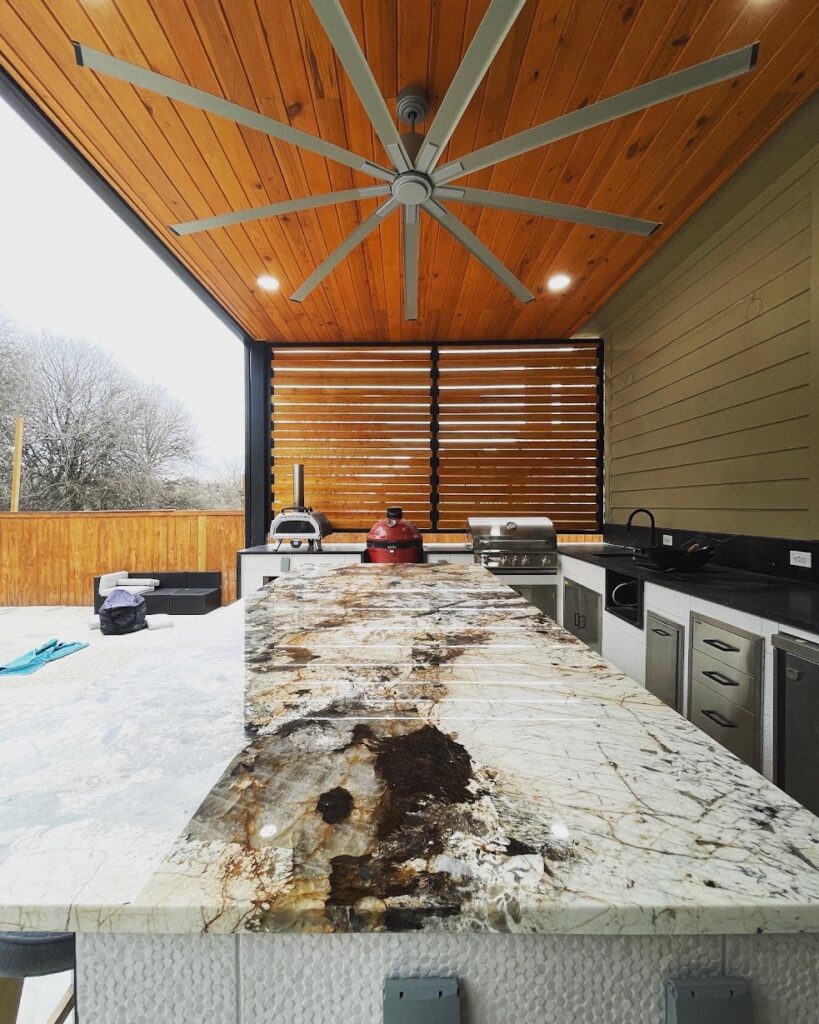
outdoor kitchen
A grill island can look finished and intentional for years, or begin showing stress after its first season of Texas heat, sudden rain, and weekend entertaining. The difference often comes down to material selection and installation details. So, can granite support outdoor kitchens? Yes – granite is one of the strongest and most proven natural-stone choices for outdoor countertops, provided the slab, substrate, fabrication, and maintenance plan are suited to the setting.
Granite brings the depth, movement, and permanence many homeowners want around a pool, patio, or covered living area. It also handles heat and sunlight better than many engineered surfaces. Still, “granite” is a broad category. One slab may be exceptionally dense and forgiving outdoors, while another may need more attentive sealing or be better reserved for a protected space.
Can Granite Support Outdoor Kitchens in Texas?
Granite can perform beautifully in an outdoor kitchen in Austin and across Central Texas. It is a natural igneous stone formed under intense heat and pressure, which gives it inherent hardness and strong heat resistance. A properly fabricated granite countertop is comfortable beside a grill, pizza oven, sink, and serving area, even when the patio sees substantial temperature changes.
The key distinction is structural: granite should not be asked to carry the kitchen by itself. The cabinetry, masonry base, or welded metal frame must provide continuous, level support beneath the stone. Granite is durable, but it is not flexible. Unsupported spans, uneven framing, and poorly placed seams can create stress that eventually leads to cracks, particularly around sink and cooktop cutouts.
For an outdoor installation, the best question is not simply whether granite is durable enough. It is whether a specific slab is appropriate for the exposure level of the kitchen. A fully covered patio has different demands than an uncovered island exposed to afternoon sun, wind-driven rain, and winter freezes.
Why Granite Is Well Suited to Exterior Spaces
Natural granite has several practical advantages outdoors. It tolerates heat extremely well, so a warm serving dish or hot grill accessory is less concerning than it would be on a heat-sensitive surface. Its color also remains generally stable under ultraviolet exposure, especially compared with materials that use resins or pigments not designed for full sun.
Its visual character is equally compelling. Outdoor kitchens often include stucco, limestone, brick, wood, steel, or porcelain tile. Granite can bring those varied materials together with a surface that feels substantial rather than overly polished or manufactured. A slab with warm mineral tones may complement native stone and cedar, while a charcoal or black granite can give a contemporary outdoor kitchen a more architectural presence.
Granite is also naturally hard, which helps it stand up to everyday serving, prep work, and entertaining. That does not mean it is indestructible. Dropping a heavy cast-iron pan on an unsupported edge can chip almost any stone. But with sensible design and quality fabrication, granite is a dependable long-term choice.
Density Matters More Than the Name Alone
Not every stone sold under a familiar trade name behaves exactly alike. Granite can vary in mineral composition, porosity, fissures, movement, and absorption. Some slabs are exceptionally dense and need minimal ongoing attention. Others have more open structure or dramatic natural features that call for a more protected application.
This is where viewing full slabs matters. A small sample cannot reveal the full pattern, mineral concentration, or natural characteristics that influence both appearance and fabrication. At a boutique slab yard, a one-on-one selection appointment gives homeowners and designers the opportunity to consider the actual material, not just a generic category label.
A carefully hand-selected slab should be evaluated for more than color. Look at its finish, veining direction, edge layout, areas that will surround cutouts, and how it coordinates with the outdoor kitchen structure. These details shape the finished result.
The Outdoor Conditions Granite Must Handle
Sun, water, and movement are the three conditions that deserve the closest attention. Granite handles them well when the installation anticipates them.
Direct sunlight is usually not a problem for granite itself, but darker stones can become very hot to the touch in an uncovered location. That may affect comfort at a bar overhang or food-prep area during peak summer hours. Pergolas, roof coverage, umbrellas, or thoughtful orientation can make the space more enjoyable without compromising the design.
Water is a more nuanced issue. Granite is not automatically waterproof, and even dense material benefits from a quality penetrating sealer. Sealer does not make the stone maintenance-free. It helps slow the absorption of water, cooking oils, wine, citrus, and other spills so they can be cleaned before they penetrate.
Movement matters because outdoor structures expand and contract. The countertop base should be stable, properly anchored, and designed for drainage. Water should not sit beneath the slab or collect around sink cutouts. In areas that can freeze, installers should also account for the effects of moisture and temperature cycling. A durable surface still depends on a sound foundation.
Choose the Right Finish for the Exposure
A polished finish gives granite its classic reflective depth and can be an excellent choice beneath a covered patio. It wipes clean easily and makes darker colors look especially rich. In a bright, open backyard, however, a leathered or honed finish may be more comfortable visually because it softens glare and offers a more tactile, relaxed appearance.
Finish selection should also consider use. Textured finishes can add character but may hold more dust, pollen, or cooking residue than polished surfaces. A refined outdoor kitchen works best when the material feels elevated and practical on the same day.
Design Details That Protect the Stone
Good outdoor granite installations are decided long before the countertop arrives. The fabricator needs accurate information about appliances, grill clearances, sink dimensions, support locations, and any planned overhangs. Cutouts are natural stress points, so their placement and corner treatment should be carefully considered.
Avoid relying on large unsupported overhangs. If a seating ledge extends beyond the base, it may require concealed steel brackets or other engineered support. This is especially true for thicker-looking edges, waterfall details, and long bar runs. A substantial appearance should be backed by equally substantial construction.
Drainage deserves equal attention. An outdoor kitchen should direct water away from cabinetry and framing, not trap it underneath the countertop. If the base is masonry, metal, or weather-rated cabinetry, verify that it remains level as the site settles. Minor shifts that would be inconsequential indoors can become visible at stone seams and edges outdoors.
For grill areas, follow appliance manufacturer clearance requirements and keep intense heat sources properly isolated. Granite has excellent heat resistance, but surrounding components, adhesives, cabinetry, and sealants may have different limits.
Caring for Granite Outdoors
Outdoor granite care is straightforward, but consistency helps preserve its finish. Clean the surface with a pH-neutral stone cleaner or mild soap and water, then rinse and dry when practical. Avoid harsh degreasers, acidic cleaners, and abrasive powders, which can affect the sealer or dull certain finishes over time.
Wipe up oils, sauces, marinades, and acidic drinks after gatherings rather than leaving them overnight. Pay special attention to areas near the grill and sink, where splatter and standing water are most likely. If water no longer beads on the surface, it may be time to reseal. The right schedule depends on the stone’s density, finish, weather exposure, and how the kitchen is used.
Covering the kitchen during prolonged storms or when it is not in use can reduce routine cleaning, though it is not a substitute for correct material selection. The goal is not to shelter granite from normal outdoor life. It is to prevent avoidable buildup and keep the entire kitchen in good condition.
When Another Surface May Make More Sense
Granite is an excellent outdoor option, but it is not the only one. Some homeowners prefer quartzite for its striking crystalline movement and strong natural durability. Soapstone can offer a softer, more understated look, though its character and maintenance needs differ. Porcelain may be appropriate for certain contemporary exterior designs, particularly where a uniform, low-absorption surface is desired.
Standard indoor quartz deserves caution in uncovered outdoor applications. Many quartz products contain resins that are not intended for direct ultraviolet exposure and can discolor or degrade over time. If a project calls for an engineered surface, confirm that the specific product is approved for exterior use rather than assuming all countertop materials perform the same way.
The right choice depends on how much sun and rain the kitchen receives, the architectural style of the home, the desired finish, and the homeowner’s comfort with natural variation. Stone should feel like a considered part of the architecture, not an afterthought selected from a small swatch.
A memorable outdoor kitchen begins with a surface that belongs in the landscape and holds its own through real use. When you are ready to compare full slabs, let the stone, the exposure, and the details of your design guide the decision together.