
Best Slabs for Fireplace Surrounds: 5 Stone Picks
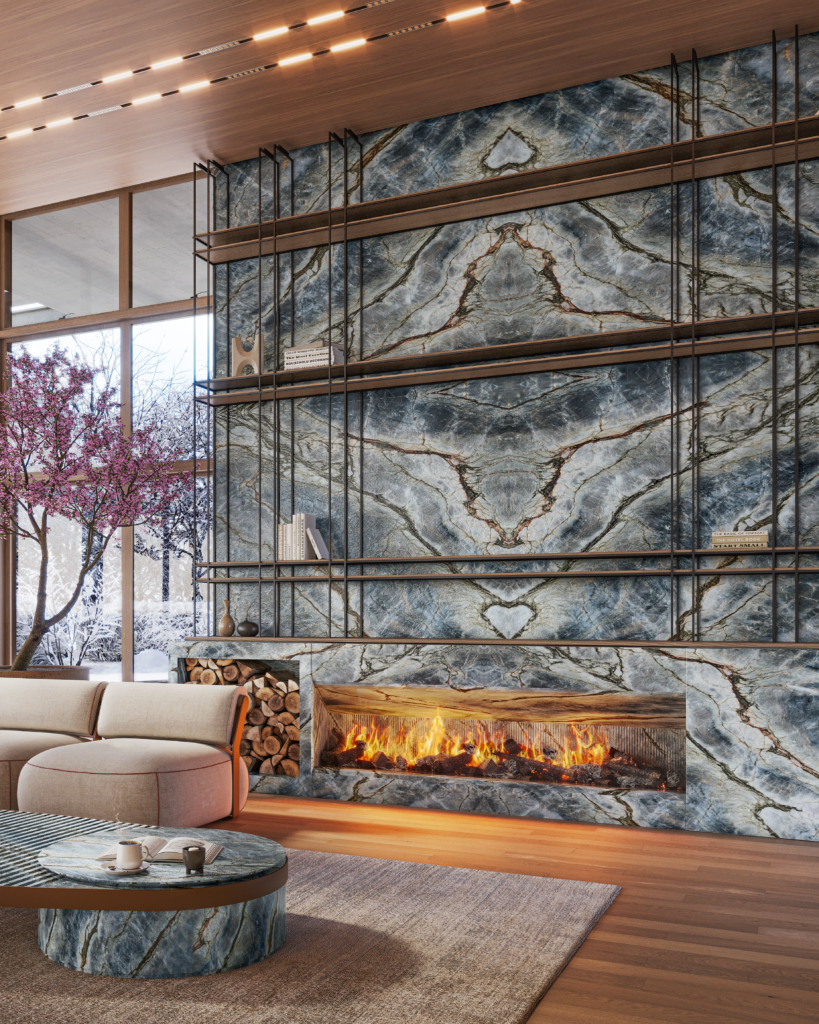
Tempest Blue quartzite in the fireplace
A fireplace surround has an unusual job: it must feel intentional from across the room and rewarding from a few feet away. Unlike a countertop, it is often viewed as a vertical composition, framed by seating, art, millwork, and changing daylight. The best slabs for fireplace surrounds are the ones that bring the right movement, scale, and finish to that architecture while meeting the practical demands of the fireplace design.
For a calm, tailored living room, that may mean a softly veined quartzite installed in full-height panels. For a dramatic modern space, it could be a bookmatched marble with bold directional veining. The material matters, but so does how the slab is selected, laid out, fabricated, and detailed around the firebox.
What makes a slab right for a fireplace surround?
Stone selection should begin with the fireplace’s visual role. Is it a quiet backdrop for custom millwork, or the centerpiece of the room? A heavily patterned slab can create a beautiful focal point, but it may compete with a sculptural mantel, busy furnishings, or a patterned rug. A quieter stone can still feel elevated when it has fine crystalline texture, a honed finish, or generous uninterrupted panels.
Scale is equally important. Large-format slab material minimizes grout lines and lets natural veining read as a single composition. This is especially valuable on floor-to-ceiling fireplaces, where small tile can make an expansive wall feel fragmented. Before a final slab is chosen, the full elevation should be considered, including the firebox opening, hearth, mantel depth, adjacent built-ins, television placement, and ceiling height.
Heat performance also deserves careful attention. A fireplace surround is not the same as the interior of a firebox. The firebox system, required clearances, substrate, and installation method should always follow the fireplace manufacturer’s specifications and local building requirements. Your fabricator and installer can help determine where stone is appropriate and how it should be supported, particularly for larger panels or floating hearths.
The best slabs for fireplace surrounds
Quartzite for natural movement and everyday confidence
Quartzite is a compelling choice when a homeowner wants the depth and individuality of natural stone with strong day-to-day durability. Its crystalline structure often creates luminous layers, sweeping veins, and subtle tonal variation that change with natural light. Some varieties feel airy and coastal; others bring moody charcoal, olive, rust, or warm gold into a room.
On a fireplace wall, quartzite can deliver the drama people often associate with marble while offering a more forgiving surface for active homes. It is particularly effective in Austin interiors that pair warm white oak, plaster, blackened metal, or limestone-inspired finishes. Because each block is different, slab-to-slab selection is essential. Look at the actual pieces together and decide where the strongest movement belongs before fabrication begins.
Marble for a refined statement
Marble remains one of the most expressive materials for a fireplace surround. Its veining has a softness and depth that manufactured surfaces do not fully replicate, whether the look is classic white and gray, warm taupe, deep green, or richly dramatic black. A marble fireplace can make a new construction room feel established and architectural.
The trade-off is maintenance awareness. Marble is more susceptible to etching and surface changes than harder natural stones, particularly in a busy household. On a vertical surround, however, it is not exposed to the same daily wear as a kitchen countertop. Many homeowners choose it precisely because a fireplace is a lower-contact application where its character can take center stage. A honed finish can make the overall look feel quieter and can help make subtle surface changes less noticeable over time.
Granite for depth, durability, and bolder character
Granite deserves a closer look beyond the traditional polished styles many people remember. Carefully hand-selected granite slabs can have remarkable movement, leathered texture, mineral sparkle, and color depth, from quiet charcoal and black to blue-gray, white, and warm earth tones. It is a strong candidate for fireplace designs that need visual weight or a more organic, grounded presence.
A dark granite surround can anchor a room with pale walls and light wood floors. A lighter granite with nuanced flecks can offer natural texture without the pronounced veining of marble or quartzite. Finishes make a meaningful difference here: leathered granite brings tactile depth and a more relaxed, contemporary character, while polished granite reflects light and amplifies its mineral detail.
Soapstone for quiet warmth and timeless texture
Soapstone is naturally matte, velvety, and deeply tactile. Its charcoal to near-black body is often crossed with fine, pale veining, which gives a fireplace a sense of permanence without making the room feel overly formal. It pairs exceptionally well with natural wood, handmade tile, aged brass, and traditional plaster.
Because soapstone is softer than granite or quartzite, it can acquire small marks over time. For many owners, that evolving patina is part of its appeal. It is a particularly fitting choice for a fireplace meant to feel collected rather than pristine, or for a home that blends modern lines with historic material character.
Quartz for tailored color and visual consistency
Premium quartz is an excellent option when the design calls for a clean, consistent field of color or a specific marble-inspired pattern. It can be especially useful when the surround continues into adjacent shelving, a bar, or other surfaces where a coordinated appearance matters. A carefully selected quartz slab can create a crisp, contemporary fireplace with fewer visual variables than natural stone.
Quartz should be evaluated with the fireplace system in mind. While it is well suited to many surround applications, heat limits and clearances vary by manufacturer and installation. Confirm the intended placement with the product guidance and your installation team, especially near direct heat. The right application can deliver a beautifully composed feature wall with dependable color consistency.
Vein direction changes the entire design
The same slab can tell two very different stories depending on how it is cut. Veins running vertically emphasize ceiling height and make a narrow fireplace wall feel more expansive. Horizontal movement can broaden the room and create a calmer, layered effect. Diagonal or sweeping veining can feel artistic, but it needs careful placement so the composition looks deliberate rather than accidental.
Bookmatching is often worth considering for stones with strong movement. This technique opens two adjoining slab sections like pages in a book, creating a mirrored central pattern. It is striking behind a linear fireplace or on a symmetrical floor-to-ceiling surround, though it is not automatically the right choice. In a more restrained interior, a continuous vein layout may look more natural and less formal.
Ask to review the slab layout at full scale before fabrication. Openings for the firebox, outlets, and mantel supports can interrupt a beautiful section of veining. Thoughtful planning keeps those functional details from taking over the visual composition.
Finish, edge detail, and hearth proportions matter
Finish can change the personality of a material as much as color. Polished stone reflects light and highlights veining, making it a natural fit for formal or light-filled rooms. Honed stone feels softer and more architectural. Leathered granite offers texture and depth, while a brushed or matte surface can reinforce a relaxed, organic palette.
For a slab fireplace, edge details should stay proportional to the design. A slim mitered return can make a stone panel appear substantial without looking bulky. A thicker hearth creates a stronger horizontal anchor, while a flush hearth keeps the elevation clean and modern. These decisions are best made alongside the fabricator, not after the stone has been chosen.
Select the actual slabs, not just a sample
A small sample is useful for narrowing a color family, but it cannot show the full movement, mineral variation, or scale of a natural slab. This is where an in-person selection experience becomes valuable. Viewing full slabs allows you to see how the material responds to light, compare pieces intended to work together, and reserve the areas that will become the focal point of the fireplace.
At Unique Stone Boutique in Austin, clients can work one-on-one to compare carefully hand-selected natural stone and quartz slabs against their cabinetry samples, paint colors, flooring, and fireplace elevation. That guidance is particularly helpful when a project calls for a statement material that still needs to live comfortably with the rest of the home. Check our website for the latest natural stone slabs specially curated for you.
Bring a photo of the room, approximate fireplace dimensions, and samples of nearby finishes to your slab appointment. With the full wall in mind, the right stone stops being just a beautiful surface and becomes the detail that gives the room its center of gravity.