
Granite Showrooms Worth Visiting First
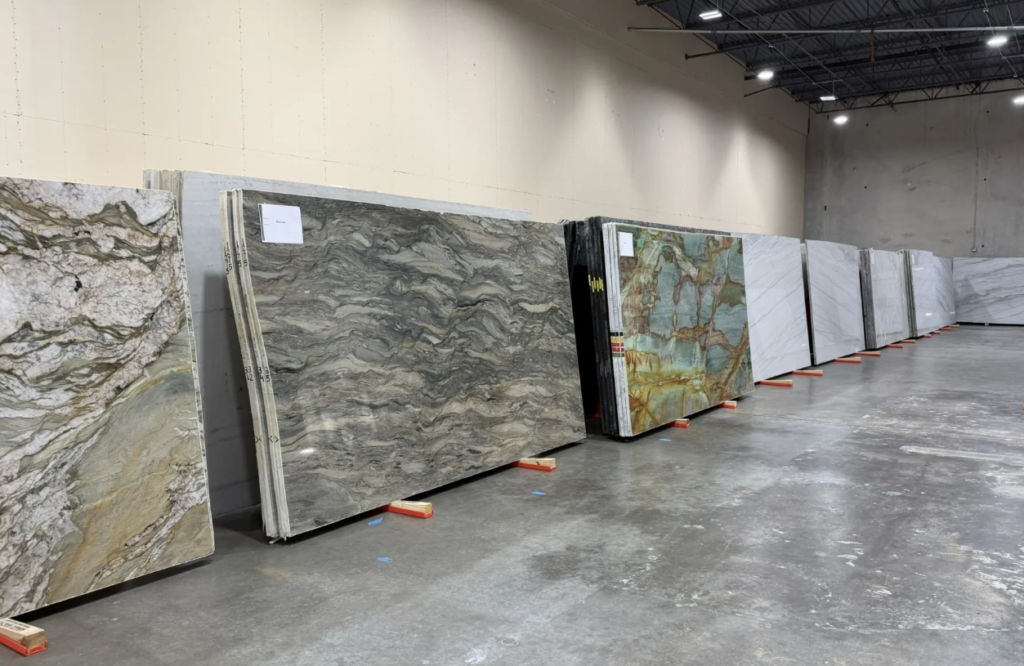
Granite can look completely different in person than it does in photos — the color, movement, and finish all shift once you’re standing in front of the slab. That’s why showrooms matter. You’re not just checking color; you’re evaluating scale, character, and how the stone will actually feel in your space. Some granites are subtle, others bold and full of motion. Seeing them in person helps you choose with confidence.
A granite slab can look balanced in a photo and completely different when you stand in front of it. The background may read warmer, the movement may feel busier, and the finish may change how the whole room comes together. That is why granite showrooms still matter. For homeowners and design professionals making finish decisions that need to last, seeing stone in person is not a luxury. It is part of choosing well.
When you visit a showroom, you are not simply confirming color. You are evaluating character, scale, consistency, and suitability for the way the space will be used. Granite has long been valued for durability, but its visual range is just as significant. Some slabs are quiet and architectural. Others are bold, high-contrast, and full of motion. A showroom gives you the chance to decide what feels right in context, not just what looks appealing on a screen.
What granite showrooms reveal that samples cannot
A small sample tells you very little about a full slab. That matters because granite is not a uniform material. Veining, mineral deposits, shifts in tone, and natural variation are part of what make it appealing. They are also the reason a sample can be misleading.
In person, you can step back and read the slab as a whole. You can see whether the pattern moves horizontally or vertically, whether there are concentrated areas of activity, and whether the color stays consistent from one end to the other. Those details affect fabrication decisions, seam placement, backsplash transitions, and the overall visual rhythm of the room.
Lighting is another reason showroom visits matter. Granite often changes under different conditions. A stone that appears cool and gray under warehouse lighting may pull warmer in a kitchen with natural light and wood cabinetry. A polished finish may amplify depth and reflectivity, while a leathered finish may bring out texture and soften contrast. Good granite showrooms help you study those differences with intention.
Not all granite showrooms offer the same experience
There is a meaningful difference between a commodity slab yard and a boutique showroom. Both may carry granite, but the selection process feels very different.
In a high-touch environment, the showroom is curated rather than crowded. The inventory has been carefully hand-selected for quality, visual appeal, and usefulness in real interior projects. Instead of walking rows of material with minimal guidance, you have the benefit of product knowledge that helps narrow the field. That is especially valuable when a project includes several moving parts, from cabinet tone and flooring to backsplash material and edge profile.
The best experience is consultative without being pushy. You should feel supported, not rushed. If you are comparing granite to quartzite or considering whether marble belongs in the same conversation, the person guiding you should be able to explain the trade-offs clearly. Some clients come in convinced they want one stone and leave with another because the showroom visit helped them understand what fits their goals more precisely.
How to evaluate granite in a showroom
The first question is not whether the slab is beautiful. Many are. The better question is whether it is beautiful for your project.
Start with movement. If your kitchen already includes strong grain in the wood, a dramatic floor tile, or statement lighting, a calmer granite may create better balance. If the room is restrained and architectural, a slab with more energy may become the feature that gives the space personality.
Next, look at scale. A pattern that feels elegant on a large island may feel too busy on a smaller vanity. Consider how much of the slab will actually be visible once cut around sinks, cooktops, and corners. This is where seeing full slabs becomes especially useful. You can begin to picture how the most important sections might be used.
Then assess tone. Granite often contains multiple undertones, not just one dominant color. What first reads as white may include cream, taupe, blue-gray, or green. Those undertones need to relate well to your cabinetry, paint, and metal finishes. If they do not, the material can feel slightly off even if it is technically within the right color family.
Finally, ask about finish and performance in practical terms. Granite is generally durable and well suited for hardworking spaces, but not every slab behaves identically. Density, porosity, and finish all play a role in how a surface performs and how it should be maintained. A knowledgeable showroom team should be comfortable discussing those nuances without oversimplifying them.
Why the best granite showrooms lead with education
Stone selection goes better when clients understand what they are seeing. Education removes hesitation and makes the final choice feel more grounded.
That does not mean turning a showroom visit into a lecture. It means explaining what is relevant. You may want to know whether a particular granite is better suited for a busy family kitchen than a softer natural stone. You may want to understand how polished and leathered finishes change the look of the same slab. A designer may need confidence that the slab selected in the showroom will support the intended palette rather than compete with it.
This educational piece is often what separates a premium showroom from a transactional one. Guidance should include both aesthetics and material behavior. There are projects where granite is the strongest choice because it delivers depth, durability, and a grounded natural look. There are other cases where quartzite or quartz may align better with the design intent. Good advice is rarely one-size-fits-all.
What design professionals notice right away
Designers, fabricators, and contractors often evaluate granite showrooms through a different lens than homeowners, but their priorities overlap more than it might seem. They want quality, consistency, and a showroom environment that helps clients make decisions confidently.
Presentation matters. If slabs are stored in a way that makes them difficult to view, or if material is poorly labeled, the selection process slows down. If the showroom team cannot answer sourcing questions or explain practical distinctions between stones, trust erodes quickly.
Professionals also pay attention to curation. A showroom with fewer but better options is often more useful than one with overwhelming volume. It is easier to specify material when the inventory reflects a point of view and a quality standard. That is particularly true for projects where the stone needs to feel elevated, distinctive, and intentional rather than generic.
Preparing for your showroom visit
It helps to arrive with a few anchors, but not with a rigid answer already in mind. Bring cabinet samples, flooring details, paint colors, and inspiration images if you have them. Those references make the conversation more productive.
At the same time, leave room to be surprised. A slab you would never have selected online may become the strongest choice once you see it in person next to your materials. That is common with natural stone. Its depth, variation, and finish often read very differently in real life.
If you are visiting a boutique showroom in Austin, the value is not just access to slabs. It is access to people who know how to interpret them. Unique Stone Boutique, for example, is built around carefully hand-selected material and one-on-one guidance, which tends to make the process feel more precise and less overwhelming for both homeowners and trade clients.
Choosing with confidence, not just excitement
Excitement is part of selecting granite, and it should be. These materials can transform a room. But confidence comes from looking beyond first impressions.
A strong showroom experience helps you understand why one slab works better than another, how finish changes the final look, and where natural variation becomes an asset rather than a risk. It gives you space to compare, ask better questions, and make a decision you will still feel good about once the installation is complete.
The right granite does more than fill a countertop layout. It gives the room substance, permanence, and a level of visual richness that only natural stone can offer. The right showroom helps you recognize it when you see it.