
Brazilian Stone Sourcing for Better Slabs
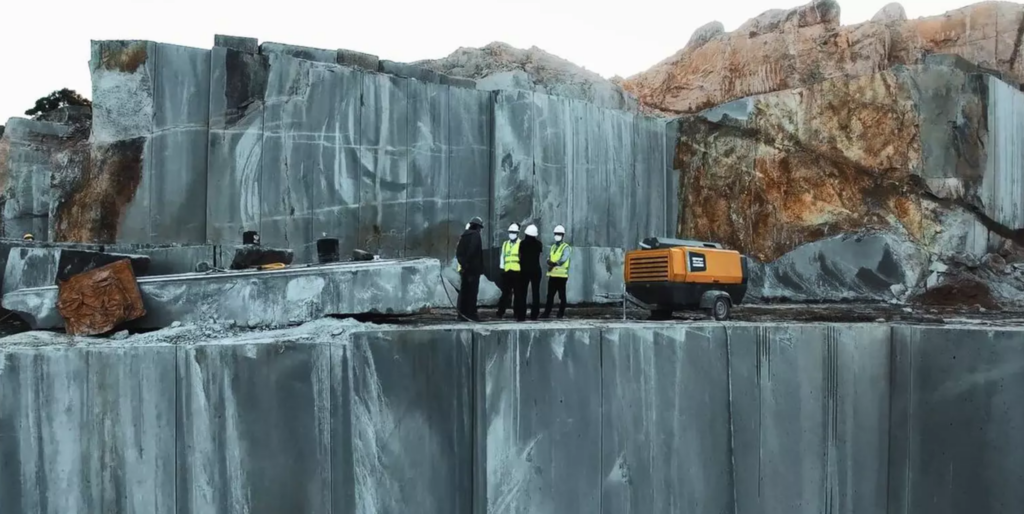
Brazil’s quarries are redefining what premium stone looks like—delivering granite and quartzite that combine striking visual appeal with exceptional durability. From bold, exotic patterns to refined, timeless textures, Brazilian stone offers the design versatility today’s market demands.
Some slabs stop you in your tracks the moment you see them. The scale of movement, the clarity of color, the way light travels through the surface – that visual impact often starts long before a slab reaches a showroom. Brazilian stone sourcing plays a major role in that outcome, especially for homeowners and design professionals who want natural stone with presence, consistency, and lasting performance.
Brazil has earned its place as one of the most important stone-producing regions in the world, but that does not mean every Brazilian slab is equal. Origin matters, yet selection matters just as much. The quarry, the block chosen, the way the material is processed, and the standards used to evaluate each slab all shape what ultimately ends up in a kitchen, bath, or feature wall.
For clients making interior selections, that distinction is worth understanding. A premium result rarely comes from buying stone as a commodity. It comes from knowing how to source it well.
Why Brazilian stone sourcing matters
Brazil is known for producing exceptional quartzites, granites, and other natural stones with dramatic veining, rich mineral character, and strong visual depth. Many of the slabs designers and homeowners gravitate toward for statement islands, waterfall edges, and full-height backsplashes come from Brazilian quarries.
What makes Brazilian material so sought after is not only beauty. It is variety. Brazilian geology yields a wide range of colors, structures, and movement patterns, from soft layered neutrals to bold linear veining and highly expressive crystalline surfaces. For design-forward interiors, that range opens far more possibilities than a limited, repetitive inventory ever could.
Still, sourcing from Brazil is not a shortcut to quality. Two slabs from the same general region can differ in surface clarity, structural integrity, background tone, or pattern balance. That is why serious sourcing is about discernment, not just country of origin.
What premium sourcing actually looks like
When people hear the word sourcing, they often imagine shipping and logistics. In practice, premium sourcing starts with judgment. The first question is not simply where a slab comes from. It is whether that particular slab deserves a place in a curated interior project.
That means looking closely at mineral composition, color consistency, movement, finish quality, and overall usability. Some slabs have remarkable drama but require careful planning because of fissures, directional veining, or strong variation. Others are more forgiving and easier to design around, which may be ideal for busy households or projects with multiple surfaces.
A well-sourced slab balances beauty with practicality. It should feel special, but it also has to work in the space where it will live.
Quarry origin is only the beginning
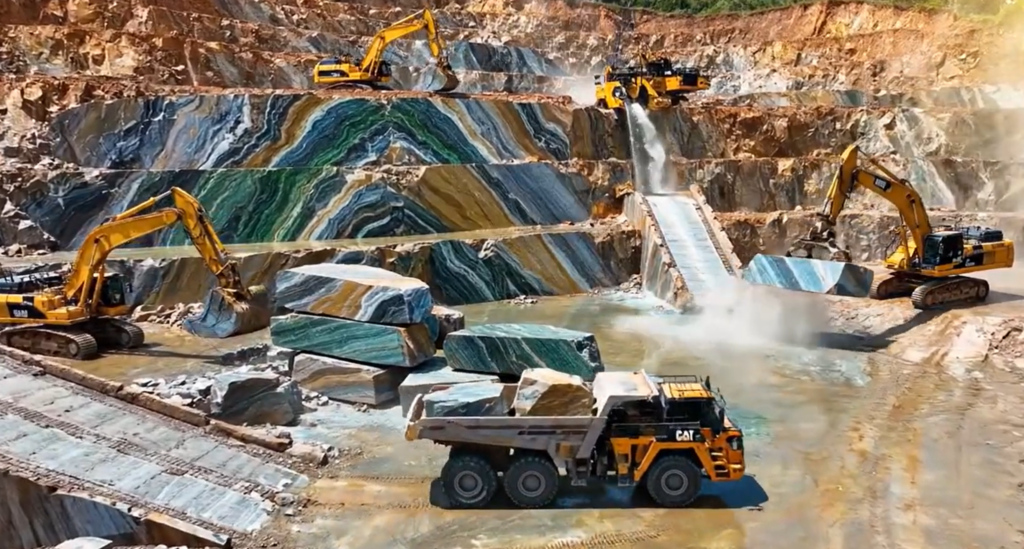
Brazil is known for producing exceptional quartzites, granites, and other natural stones with dramatic veining, rich mineral character, and strong visual depth. Many of the slabs designers and homeowners gravitate toward for statement islands, waterfall edges, and full-height backsplashes come from Brazilian quarries.
A quarry name can tell you something about the stone, but it does not tell you everything. Natural stone is inherently variable. Blocks from different areas of the same quarry may show meaningful shifts in tone, movement, and density.
That is why experienced stone professionals do not rely on labels alone. They evaluate the actual slabs. This is especially important with Brazilian quartzites and granites, where the most compelling material often carries strong personality. Personality is part of the appeal, but it requires a trained eye to separate desirable variation from problematic inconsistency.
Processing affects the final result
Even a beautiful block can underperform if it is not cut, finished, and handled well. Slab thickness consistency, polish quality, resin application, and edge condition all affect how the material looks and how well it fabricates.
This is one of the less visible parts of Brazilian stone sourcing, but it matters. A slab with excellent geological character can lose some of its value if processing obscures color, leaves distracting surface issues, or creates avoidable fabrication challenges. For clients, the difference may show up later in layout limitations or visual compromises that were not obvious at first glance.
Why hand selection makes such a difference
Natural stone is not a product category that rewards rushed decisions. Photos can be useful, but they flatten detail. They rarely capture the depth of a polished quartzite, the softness of a honed finish, or the way veining moves across a full slab.
That is why hand selection remains one of the most important parts of a premium stone experience. In a boutique showroom setting, clients can compare slabs in person, study movement at scale, and understand how one piece relates to another if a project requires multiple slabs. This is particularly important with Brazilian materials because so much of their appeal is visual nuance.
A carefully hand-selected slab often feels different from generic inventory for one simple reason: someone made a decision to choose that stone, not just stock it.
Brazilian quartzite versus other options
For many interior projects, Brazilian quartzite is the category that draws the most attention. It offers the drama people often associate with marble while delivering greater durability in many applications. That combination makes it especially attractive for kitchens, bar areas, and high-use spaces where clients want a refined look without treating the surface as untouchable.
That said, quartzite is not automatically the right answer for every project. Some homeowners prefer the softer expression of marble. Some designers want the more uniform mineral appearance of certain granites. In lower-contrast interiors, a highly active Brazilian slab may overwhelm the room rather than elevate it.
The best choice depends on how the material will interact with cabinetry, lighting, flooring, and the overall visual rhythm of the home. Strong sourcing helps narrow the field to materials worth considering, but the final decision should still respond to the space itself.
What designers and homeowners should look for
When reviewing Brazilian stone, the first step is to assess whether the slab has a compelling overall composition. A premium slab does not need to be loud, but it should feel intentional. The background tone should read clearly, the movement should carry across the slab in a way that feels balanced, and any dramatic features should enhance the whole rather than interrupt it.
Next, consider scale. Some patterns are stunning on a full kitchen island and far less effective on a smaller vanity. Others have enough subtlety to work beautifully across several applications. This is where one-on-one guidance becomes valuable. A slab may be gorgeous on its own, yet still be the wrong fit for the dimensions and focal points of the room.
It is also wise to ask how the material is expected to perform in the intended application. Not every natural stone behaves the same way. Some are denser and more forgiving. Others require more thoughtful maintenance expectations. Premium selection is not about steering every client toward the same stone. It is about matching the right stone to the right use.
The value of supplier relationships
One of the clearest differences between commodity purchasing and boutique sourcing is access. Strong supplier relationships often mean earlier visibility into notable material, better quality control, and a more selective inventory overall.
For clients, this can translate into a more confident buying process. Instead of sorting through large quantities of inconsistent slabs, they are presented with materials that have already passed a higher standard. That does not remove choice. It improves it.
This is especially relevant for Brazilian imports, where quality can vary widely depending on quarry practices, processing standards, and export channels. Trusted sourcing relationships create a better filter, and that filter matters when the goal is a finished interior that feels elevated, cohesive, and enduring.
Bringing the slab into the room
A remarkable slab still needs a thoughtful setting. The undertones in Brazilian stone can shift noticeably depending on natural light, cabinet paint, wall color, and metal finishes. A cooler quartzite may sharpen a contemporary kitchen. A warmer granite with layered mineral movement may bring more depth to a transitional or organic interior.
This is why slab selection should never happen in isolation. It helps to view the material alongside wood samples, paint selections, tile options, and hardware. The goal is not just to choose an impressive stone. It is to choose one that belongs in the room.
At a boutique showroom, that process tends to feel more personal and more precise. For many homeowners in Austin and surrounding design markets, that level of care is the difference between liking a slab and feeling fully confident in it.
Unique Stone Boutique approaches sourcing with exactly that mindset – carefully hand-selected material, direct stone knowledge, and a showroom experience built around guidance rather than guesswork.
The most memorable interiors rarely come from generic choices. They come from materials with character, selected with care, and placed where their natural beauty can do its best work.